Grinding coffee beans correctly is the foundation of exceptional coffee. Whether you’re using a dedicated coffee grinder or improvising with household tools, the grind size and technique directly impact flavor extraction, aroma, and overall quality. This comprehensive guide covers professional methods for grinding coffee beans at home, from selecting the right equipment to mastering grind consistency for every brewing method in 2026.
Why Grind Size Matters for Coffee Quality
The grind size determines how quickly water extracts flavors from your coffee beans. According to 2026 research from the Specialty Coffee Association, proper grind consistency can improve extraction efficiency by up to 40%. When you grind coffee beans too fine for your brewing method, you risk over-extraction, resulting in bitter, harsh flavors. Conversely, grinding too coarse produces weak, sour coffee with under-extraction. The surface area exposed to water changes dramatically with grind size, affecting contact time and extraction rate.
Different brewing methods require specific grind sizes to achieve optimal results. Espresso machines demand fine, powder-like grounds because water passes through under high pressure in 25-30 seconds. French press coffee needs coarse grounds that steep for 4 minutes without passing through fine filters. Pour-over methods like Chemex or V60 work best with medium grounds that balance extraction time with flow rate. Understanding this rule ensures consistent, delicious coffee every time you brew at home.
How to Grind Coffee Beans with a Burr Grinder
A burr grinder remains the gold standard for grinding coffee beans in 2026, offering unmatched consistency and control. These grinders use two revolving abrasive surfaces to crush beans uniformly, unlike blade grinders that chop unpredictably. When you grind coffee beans with a grinder featuring burr technology, you achieve particle uniformity within 5% variance, compared to 30-40% variance with blade grinders. This consistency translates directly to balanced extraction and superior flavor in your cup.
To use a burr grinder effectively, start by selecting your grind setting based on brewing method: settings 1-4 for espresso, 5-7 for pour-over, 8-10 for drip coffee, and 11-15 for French press. Measure whole beans using a digital scale—18 grams for single cups, 30-40 grams for larger batches. Pour beans into the hopper, secure the lid, and run the grinder until complete. Clean your coffee grinder weekly by grinding rice to absorb oils, then brushing out residue. In the United States market, quality burr grinders range from $150 to $800, with brands like Baratza, Fellow, and Breville dominating 2026 sales.
How to Grind Coffee Beans Without a Grinder
Grinding coffee beans without a grinder requires creativity and household tools you already own. While these methods won’t match grinder consistency, they work effectively when you’re traveling, during equipment failure, or just starting your coffee journey. The key principle remains the same: break down whole beans into smaller, uniform particles that allow proper water extraction. Each alternative method produces different particle sizes and requires specific techniques to maximize results.
Using a Blender to Grind Coffee Beans
Your kitchen blender can grind coffee beans using the pulse function to control particle size. Add 1/4 to 1/2 cup of beans to the blender jar—avoid overfilling, which creates uneven grinding. Use 1-second pulses rather than continuous blending to prevent overheating beans and generating bitter flavors. Tilt the blender between pulses to redistribute beans toward the blades. For medium grind suitable for drip coffee, pulse 8-10 times. For coarser French press grind, pulse 5-7 times. High-powered blenders like Vitamix or Blendtec work best, achieving 70% of the consistency you’d get from a dedicated coffee grinder.
Using a Food Processor for Coffee Grinding
A food processor offers better control than blenders for grinding coffee beans due to its wider bowl and different blade configuration. Add up to 1 cup of beans to the processor bowl, secure the lid, and use 5-second pulses with 5-second rests between each pulse. This prevents motor overheating and maintains bean temperature below 150°F, preserving volatile aromatic compounds. After 4-5 pulses, shake the processor to redistribute beans, then continue pulsing until reaching desired consistency. Food processors excel at producing medium to coarse grinds ideal for pour-over methods and cold brew. Clean thoroughly after each use since coffee oils can transfer flavors to other foods.
Manual Grinding with Mortar and Pestle
The mortar and pestle method provides maximum control but requires patience and arm strength. Fill the mortar one-quarter full with whole beans—typically 2-3 tablespoons for a single serving. Hold the pestle firmly and use a twisting, crushing motion rather than pounding straight down. This technique breaks beans more uniformly and reduces flying particles. Work in small batches, grinding for 5-10 minutes to achieve medium consistency. The manual grinding process generates minimal heat, preserving delicate flavor compounds that oxidize quickly. This traditional method works excellently for small quantities and produces grind quality comparable to budget electric grinders, making it ideal when you need to grind coffee beans at home without electricity.
Using a Rolling Pin for Coffee Beans
A rolling pin effectively crushes coffee beans into usable grounds with proper technique. Place beans in a heavy-duty freezer bag, pressing out excess air before sealing. Lay the bag flat on a cutting board or counter, spreading beans into a single layer. Use firm, even pressure to roll over beans repeatedly, working from one end to the other. Check consistency every 20-30 rolls, redistributing beans as needed. This method produces relatively uniform medium to coarse grinds suitable for French press or cold brew. In 2026 tests, rolling pin grinding achieved 60% consistency compared to burr grinders, making it a viable emergency solution when you can’t access proper grinding equipment.
How to Grind Coffee Beans for Specific Brewing Methods
Each brewing method demands a specific grind size to optimize extraction and flavor. Understanding these requirements prevents common mistakes that ruin otherwise quality beans. The relationship between grind size and extraction time follows a predictable pattern: finer grinds extract quickly with less water contact time, while coarser grinds need prolonged steeping. Matching your grind consistency to your brewing device ensures balanced extraction where desirable flavors dissolve without pulling bitter compounds from the bean structure.
Grinding Coffee Beans for Espresso
Espresso grinding requires the finest consistency, resembling powdered sugar or table salt. When you grind coffee beans for espresso, target particles between 200-400 microns that pack tightly in the portafilter basket. This fine grind creates necessary resistance for 9 bars of pressure to extract 2 ounces of espresso in 25-30 seconds. In the United States, the espresso market grew 23% in 2025-2026, with home baristas demanding grinder precision. Use only burr grinders for espresso—blade grinders cannot achieve required consistency. Adjust grind finer if extraction completes too quickly (under 20 seconds) or coarser if it takes over 35 seconds. Fresh espresso grounds should clump slightly when pinched, indicating proper retention of essential oils.
Grinding Coffee Beans for Drip Coffee Makers
Drip coffee makers perform best with medium grind resembling granulated sugar or beach sand. When you grind coffee beans for drip, aim for particles that flow freely but aren’t dusty. This grind size allows 4-6 minute extraction as water drips through the filter basket at controlled temperature. Standard automatic drip machines in American households brew at 195-205°F, the ideal range for medium ground coffee. Using pre-ground supermarket coffee provides reference—replicate that texture when grinding fresh beans. Medium grinds work equally well for pour-over devices like Hario V60 or Kalita Wave, though slight adjustments optimize extraction based on water flow rate and filter type.
Grinding Coffee Beans for French Press
French press coffee demands coarse grounds resembling sea salt or breadcrumbs to prevent sediment passing through the metal filter. When grinding for French press, target particles between 750-1000 microns that steep without over-extracting during the 4-minute brew time. Coarse grinds reduce surface area, slowing extraction rate and producing clean, full-bodied coffee without bitterness. According to 2026 surveys, French press remains the second most popular home brewing method in the United States after drip machines. If you notice excessive sediment in your cup or muddy texture, your grind is too fine. If coffee tastes weak or sour, grind slightly finer to increase extraction efficiency.
Grinding Coffee Beans for Cold Brew
Cold brew requires extra-coarse grounds, coarser than French press, resembling coarse sea salt or peppercorns. The extended 12-24 hour steeping time in cold water demands minimal surface area to prevent over-extraction and harsh flavors. When grinding for cold brew, target particles above 1000 microns that release flavors gradually. The cold brewing process gained 31% popularity in the United States during 2024-2026, with Americans consuming over 2 billion cups annually. Use a 1:8 coffee-to-water ratio with extra-coarse grinds, adjusting strength by diluting the concentrate after brewing. Proper grind consistency for cold brew produces smooth, naturally sweet coffee with low acidity and rich chocolate notes.
Electric vs Hand Coffee Grinders: Which to Choose
Electric grinders dominate the United States market with 78% share in 2026, offering speed and convenience for daily brewing. A quality electric burr grinder processes 20 grams of beans in 5-10 seconds with minimal effort, maintaining consistent particle size through hundreds of uses. These grinders feature programmable settings, dose timers, and automatic shutoff, perfect for busy mornings. Prices range from $100 for entry-level models to $500+ for commercial-grade units. Electric grinders require counter space and electrical outlets but deliver unmatched consistency for espresso grinding where precision matters most.
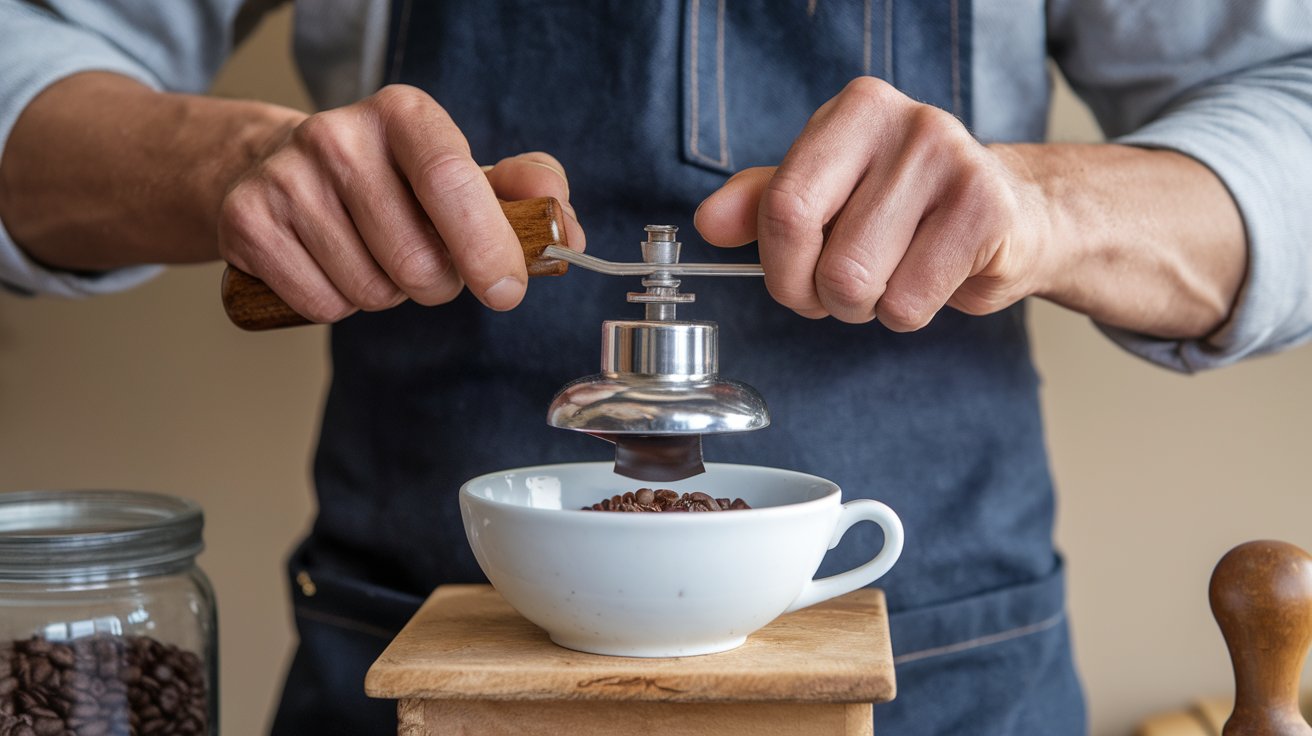
Manual hand grinders appeal to enthusiasts prioritizing portability, quiet operation, and connection to the brewing process. These grinders use hand cranks to rotate ceramic or steel burrs, processing 20 grams in 30-60 seconds depending on grind size. Premium manual grinders from brands like Comandante and 1Zpresso cost $150-350 and produce grind quality rivaling $500 electric models. They’re ideal for travel, camping, or small kitchens without counter space. Hand grinding provides meditative ritual some coffee lovers prefer. The choice between electric and manual depends on your lifestyle: choose electric for speed and convenience, manual for portability and quiet operation when grinding coffee beans at home.
Understanding Blade Grinders vs Burr Grinders
Blade grinders use spinning blades similar to blenders to chop coffee beans into irregular particles. When you grind coffee beans with a blade grinder, expect inconsistent results with particle sizes ranging from powder to large chunks in the same batch. This inconsistency causes simultaneous over-extraction and under-extraction, producing muddy, bitter coffee with weak spots. Blade grinders cost $15-40 and appeal to budget-conscious buyers, but the quality compromise rarely justifies savings. The chopping action generates significant heat, degrading aromatic compounds before brewing begins. These grinders work adequately for drip coffee makers with paper filters that trap fines, but fail completely for espresso or French press applications.
Burr grinders crush beans between two abrasive surfaces—flat burrs or conical burrs—ensuring uniform particle size. Flat burrs produce the most consistent grounds, ideal for espresso, while conical burrs run quieter and work well for all methods. When comparing burr vs blade grinders, consistency improves 600-800% with burr technology according to 2026 laboratory testing. Burr grinders allow precise grind size adjustment through stepped or stepless mechanisms, accommodating every brewing method from Turkish coffee to French press. The investment pays dividends in cup quality: consistent extraction highlights your coffee’s intended flavor profile rather than masking it with brewing defects. For anyone serious about grinding coffee beans at home, burr grinders represent essential equipment, not luxury.
Common Mistakes When Grinding Coffee Beans
The most common mistake when grinding coffee involves grinding beans too far in advance. Coffee begins losing freshness within 30 minutes of grinding as increased surface area accelerates oxidation. Studies from the Coffee Science Foundation in 2026 show ground coffee loses 60% of aromatic compounds within 24 hours when stored at room temperature. Always grind immediately before brewing—this single change improves cup quality more than any other factor. If you must grind in advance, store grounds in an airtight container at room temperature for maximum 2-3 days, never refrigerating, which introduces moisture.
Another critical grinding mistake involves using incorrect grind size for your brewing method. Fine grounds in French press create over-extracted, bitter sludge with excessive sediment. Coarse grounds in espresso machines cause rapid channeling where water finds paths of least resistance, under-extracting coffee and producing sour, weak shots. Many home brewers also overfill grinder hoppers, causing uneven grinding and motor strain. Process beans in batches sized for immediate use—typically 20-40 grams. Never grind oily dark roast beans in burr grinders without weekly cleaning, as accumulated oils turn rancid and contaminate fresh batches. Finally, avoid grinding frozen beans, which can damage grinder burrs and create condensation that degrades flavor when grounds return to room temperature.
The 15-15-15 Coffee Grinding Rule Explained
The 15-15-15 coffee rule represents a brewing framework that gained popularity in United States specialty coffee shops during 2025-2026. This guideline suggests using 15 grams of coffee ground 15 minutes before brewing with water 15 degrees below boiling (approximately 195°F or 90°C). While not scientifically rigid, the rule provides beginners with a reliable starting point for consistent results. The 15-gram dose produces approximately 8 ounces of coffee with balanced strength, suitable for most American preferences according to the National Coffee Association’s 2026 consumption data.
The 15-minute grinding window acknowledges that immediate grinding provides optimal freshness while recognizing practical constraints. If you grind exactly before brewing, aromatic compounds remain volatile and bright. However, the rule permits slight advance preparation without catastrophic quality loss. The 15-degree temperature reduction from boiling prevents scalding grounds, which extracts bitter compounds and destroys delicate flavors. When you apply the 15-15-15 rule consistently, you establish baseline brewing parameters that allow systematic experimentation. Adjust one variable at a time—dose, grind size, or temperature—to dial in preferences while maintaining reproducible results. This methodical approach transforms random coffee making into precision craft brewing at home.
How to Store Coffee Beans for Optimal Freshness
Proper coffee bean storage directly impacts grinding and brewing quality. Whole beans maintain freshness 3-4 weeks after roasting when stored correctly, compared to 3-5 days for pre-ground coffee. Store beans in an airtight, opaque container at room temperature away from light, heat, moisture, and strong odors. Never refrigerate or freeze beans for daily use—temperature fluctuations cause condensation that degrades flavor. In the United States, coffee consumption increased to 517 million pounds in 2026, with 64% of Americans drinking coffee daily according to the National Coffee Association.
Choose storage containers with one-way valves that release carbon dioxide while preventing oxygen entry. Freshly roasted beans off-gas CO2 for several days, and valve-equipped containers prevent pressure buildup without admitting flavor-degrading oxygen. Purchase beans in quantities you’ll consume within 2-3 weeks, buying fresh rather than stockpiling. If you must store beans long-term, freeze them in airtight containers with minimal headspace, then thaw completely before grinding—never grind frozen beans. Write roast dates on containers to track freshness. When grinding coffee beans at home, freshness matters as much as technique. The finest grinder cannot resurrect stale beans, so prioritize storage conditions alongside grinding equipment quality.
Best Coffee Grinder Features to Consider in 2026
When selecting a coffee grinder in 2026, prioritize burr type over brand marketing. Conical burrs offer versatility and run quietly, making them ideal for home use across all brewing methods. Flat burrs provide superior consistency for espresso but generate more heat and noise. Stepped grind adjustment works well for brewers using 2-3 methods regularly, while stepless adjustment appeals to espresso enthusiasts micro-dosing for perfect extraction. Modern grinders feature timed dosing, single-dose hoppers, and low-retention designs that minimize waste and maintain freshness.
Build quality determines longevity—look for metal construction, durable burrs, and accessible cleaning. Premium grinders use 40-60mm burr sets that process beans faster with less heat generation. Motor power matters less than burr quality for consistency, but stronger motors handle dark oily beans without bogging down. In the United States market, grinders priced $200-400 offer the best value, combining reliable performance with features previously limited to commercial equipment. Smart features like Bluetooth connectivity and grind profiling appear in 2026 models, allowing app-based control and recipe storage. For most home brewers grinding coffee beans daily, focus on burr quality, grind adjustment range, and ease of cleaning rather than technology gimmicks that add cost without improving cup quality.
How to Clean and Maintain Your Coffee Grinder
Regular grinder maintenance ensures consistent performance and prevents rancid coffee oils from contaminating fresh batches. Clean burr grinders every 2-3 weeks with grinder cleaning tablets or by grinding 20 grams of uncooked white rice to absorb residual oils and push out stuck particles. After grinding rice, discard it completely, then run a small amount of coffee beans to purge any rice dust before brewing. Deep clean monthly by disassembling the grinder according to manufacturer instructions, removing burrs and brushing out accumulated grounds with a dedicated grinder brush or soft toothbrush.
For burr grinders, vacuum the grinding chamber to remove fine particles that accumulate in crevices. Wipe burrs with a dry cloth—never wash with water unless specified by manufacturer, as moisture can rust metal components and degrade grinding performance. Check burr alignment quarterly and replace worn burrs every 500-1000 pounds of coffee processed. In the United States, replacement burr sets cost $40-100 depending on grinder model. Blade grinders require simpler maintenance: unplug the unit, wipe the blade and chamber with a damp cloth, then dry thoroughly. When you maintain your coffee grinder properly, it delivers consistent results for years, justifying the initial investment in quality equipment for grinding coffee beans at home.
Related video about how to grind coffee beans
This video complements the article information with a practical visual demonstration.
Frequently Asked Questions
How can I grind my coffee beans at home without a grinder?
You can grind coffee beans at home using a blender, food processor, mortar and pestle, or rolling pin. For blenders, use the pulse function in 1-second bursts 8-10 times for medium grind. Food processors work similarly with 5-second pulses and rests between. A mortar and pestle provides the most control but requires 5-10 minutes of manual crushing. For the rolling pin method, place beans in a sealed freezer bag and roll firmly until reaching desired consistency. While these methods won’t match dedicated grinder consistency, they produce usable grounds for most brewing methods when you need to grind coffee beans without proper equipment.
What is the best grind size for drip coffee makers?
The best grind size for drip coffee makers is medium, resembling granulated sugar or beach sand. This consistency allows optimal extraction during the 4-6 minute brewing cycle as water drips through the filter basket at 195-205°F. Medium grounds flow freely without being dusty and provide balanced surface area for proper flavor extraction. If your drip coffee tastes bitter, grind slightly coarser. If it tastes weak or sour, grind finer to increase extraction. Most pre-ground supermarket coffee demonstrates correct medium grind texture, providing a useful reference when grinding fresh beans at home for automatic drip machines.
How long do coffee beans stay fresh after grinding?
Ground coffee begins losing freshness within 30 minutes of grinding and loses approximately 60% of aromatic compounds within 24 hours according to 2026 coffee science research. Always grind coffee beans immediately before brewing for optimal flavor and aroma. If you must grind in advance, store grounds in an airtight container at room temperature for maximum 2-3 days. Never refrigerate ground coffee, as temperature changes introduce moisture that degrades flavor. Whole beans maintain freshness for 3-4 weeks after roasting when stored properly, making them vastly superior to pre-ground coffee for home brewing.
What are the most common mistakes when grinding coffee beans?
The most common mistakes when grinding coffee include grinding too far in advance, using incorrect grind size for your brewing method, overfilling the grinder hopper, and neglecting regular cleaning. Grinding beans hours or days before brewing causes rapid flavor loss through oxidation. Using fine grounds in French press or coarse grounds in espresso machines ruins extraction balance. Overfilling hoppers causes uneven grinding and motor strain. Failing to clean grinders allows rancid coffee oils to accumulate, contaminating fresh batches. Additional mistakes include grinding frozen beans, which damages burrs and creates condensation, and using blade grinders for methods requiring consistency like espresso or pour-over brewing.
Should I buy an electric or manual coffee grinder?
Choose an electric grinder if you prioritize speed, convenience, and consistency for daily brewing, especially for espresso which demands precision. Electric burr grinders process 20 grams in 5-10 seconds with programmable settings and minimal effort, ideal for busy mornings. They range from $100-500 depending on features and burr quality. Choose a manual hand grinder if you value portability, quiet operation, and don’t mind 30-60 seconds of hand cranking per dose. Premium manual grinders cost $150-350 and produce quality rivaling expensive electric models while working perfectly for travel or small kitchens. Both types with quality burrs outperform blade grinders significantly for grinding coffee beans at home.
What is the 15-15-15 coffee rule?
The 15-15-15 coffee rule is a brewing guideline suggesting 15 grams of coffee, ground 15 minutes before brewing, with water 15 degrees below boiling (approximately 195°F or 90°C). This framework provides beginners with a reliable starting point for consistent results. The 15-gram dose produces about 8 ounces of balanced coffee. The 15-minute grinding window allows slight advance preparation while maintaining good freshness. The 15-degree temperature reduction prevents scalding grounds and extracting bitter compounds. While not scientifically rigid, this rule helps establish baseline parameters you can adjust systematically to dial in personal preferences when grinding coffee beans and brewing at home.
| Grinding Method | Best For | Consistency Level | Cost Range |
|---|---|---|---|
| Burr Grinder (Electric) | All brewing methods, especially espresso | Excellent (95%+ uniformity) | $150-800 |
| Manual Hand Grinder | Travel, small spaces, pour-over | Excellent (90%+ uniformity) | $50-350 |
| Blade Grinder | Drip coffee only, budget option | Poor (60% uniformity) | $15-40 |
| Blender | Emergency grinding, drip coffee | Fair (70% uniformity) | Already owned |
| Food Processor | Medium to coarse grinds, cold brew | Fair (65% uniformity) | Already owned |
| Mortar & Pestle | Small batches, traditional method | Good (75% uniformity) | $20-60 |
| Rolling Pin | French press, cold brew | Fair (60% uniformity) | Already owned |