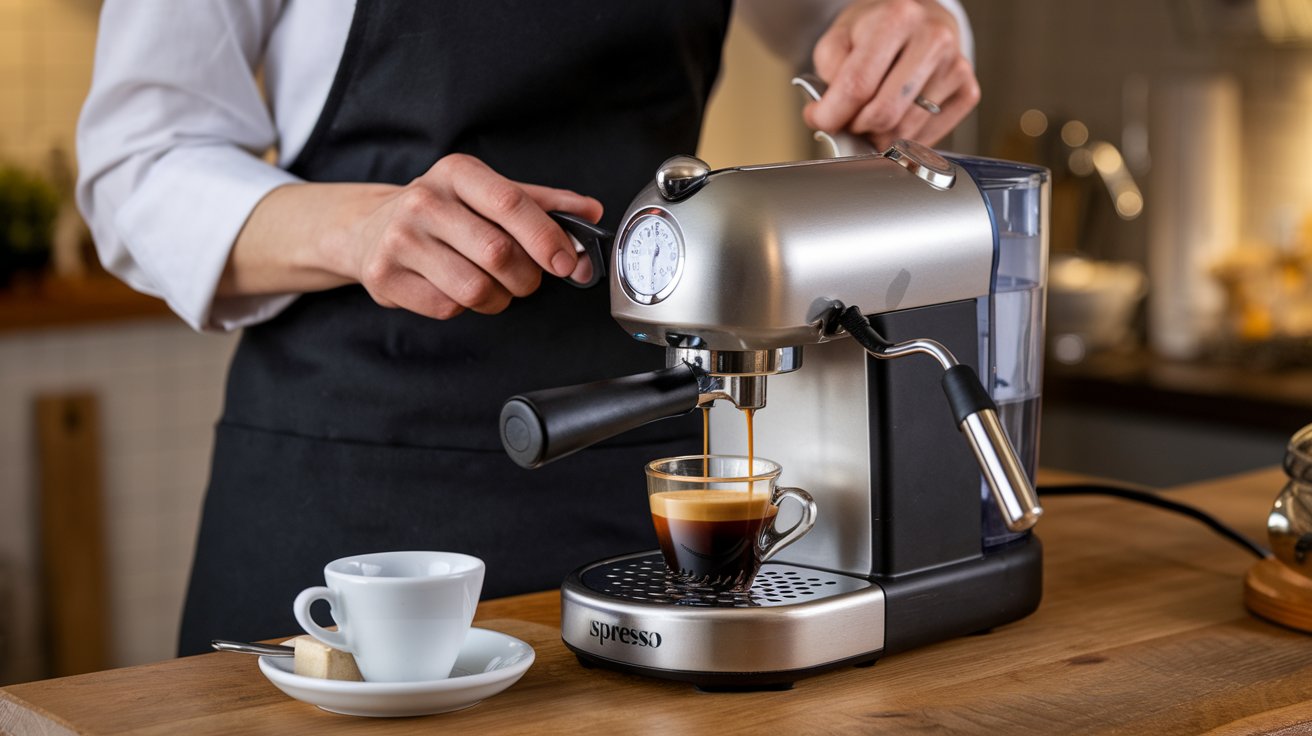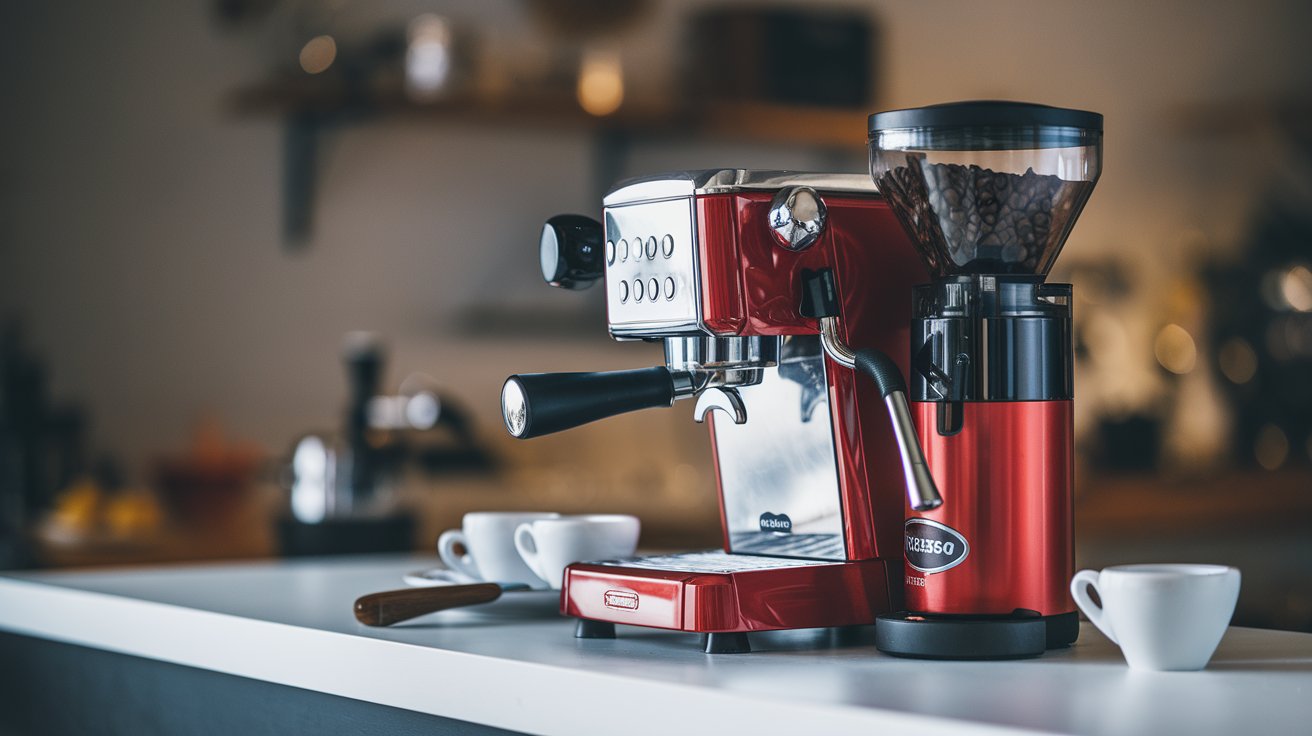
Finding the best espresso machine for home in 2026 requires balancing quality, budget, and skill level. Whether you’re a beginner exploring entry-level models or an enthusiast seeking professional-grade equipment, the American market offers exceptional options from Breville, DeLonghi, and Gaggia. This comprehensive guide examines semi-automatic, fully automatic, and manual machines to help you make an informed decision based on your specific needs and coffee preferences.
Understanding Espresso Machine Types for Home Use
The home espresso machine market in 2026 offers three primary categories, each designed for different user experiences and skill levels. Semi-automatic machines provide the perfect balance between control and convenience, allowing baristas to manage extraction time while automating pressure and temperature. Fully automatic machines handle grinding, dosing, brewing, and milk frothing with minimal user intervention, ideal for busy households. Manual espresso machines appeal to purists who want complete control over every variable in the extraction process.
Understanding which type of espresso machine suits your lifestyle is crucial before making a purchase. Semi-automatic models dominate the enthusiast market because they offer hands-on engagement without overwhelming complexity. American coffee culture has embraced these machines, with approximately 68% of home espresso enthusiasts preferring semi-automatic options according to 2026 National Coffee Association data. The learning curve varies significantly, with automatic machines requiring virtually no training while manual lever machines demand months of practice to achieve consistency.
Top Semi-Automatic Espresso Machines for Home
Semi-automatic machines represent the sweet spot for home baristas seeking quality espresso without commercial complexity. These machines maintain consistent pressure (typically 9 bars) and precise temperature control while allowing users to start and stop extraction manually. The 2026 market leaders include models with PID temperature controllers, pre-infusion capabilities, and dual boiler systems that enable simultaneous brewing and steaming.
Gaggia Classic Pro: Best Value Semi-Automatic
The Gaggia Classic Pro continues dominating the affordable espresso machine category in 2026, priced around $529. This Italian-manufactured machine features a commercial-style 58mm portafilter, three-way solenoid valve for dry pucks, and a powerful 15-bar pump. The stainless steel boiler heats quickly, reaching optimal brewing temperature in approximately 5 minutes. American users particularly appreciate the machine’s compact footprint (9.3 x 9 x 13.5 inches), making it ideal for smaller kitchens without sacrificing performance quality.
What sets the Gaggia Classic Pro apart is its extensive modifiability and durability. The machine uses standard commercial parts, ensuring easy repairs and upgrades. Popular modifications include PID temperature controller installation, OPV adjustment for precise 9-bar pressure, and bottomless portafilter upgrades. With proper maintenance, this machine delivers consistent espresso for 10-15 years, offering exceptional value compared to disposable super-automatic alternatives.
Breville Barista Express: Best All-in-One for Beginners
The Breville Barista Express remains the top recommendation for beginners in 2026, retailing at $749. This Australian-designed machine integrates a conical burr grinder directly into the unit, eliminating the need for separate grinder purchases. The built-in grinder features 18 grind settings with adjustable dose control, though serious enthusiasts often upgrade to standalone grinders for improved consistency. The machine includes a razor dosing tool, four filter baskets, and a steam wand with automatic purge function.
User-friendly features make the Barista Express particularly appealing to espresso beginners. The integrated pressure gauge provides real-time extraction feedback, helping users identify channeling or incorrect grind settings. Digital temperature control (PID) maintains stability within 2°F, crucial for consistent extraction. The volumetric control allows programming single and double shot volumes. Customer satisfaction ratings remain high at 4.6/5 stars across major retailers, with American buyers praising the comprehensive package that eliminates decision paralysis.
Rancilio Silvia Pro X: Professional Performance at Home
The Rancilio Silvia Pro X represents professional-grade espresso capability for serious home baristas, priced at $2,195 in 2026. This dual boiler machine features independent temperature control for brewing (controlled via PID) and steaming, enabling simultaneous operation without thermal compromise. The commercial E61-style group head provides exceptional thermal stability, while the integrated shot timer and pressure profiling capabilities rival commercial machines costing significantly more.
Advanced features justify the premium price point for dedicated enthusiasts. The machine includes flow control for manual pressure profiling, allowing users to experiment with pre-infusion and declining pressure profiles. The 1.8-liter steam boiler generates powerful, dry steam perfect for microfoam creation. Built-in scales and Bluetooth connectivity enable precise dose monitoring and shot tracking through smartphone apps. This machine targets experienced users who understand espresso fundamentals and want professional results at home without commercial machine bulk.
Best Fully Automatic Espresso Machines
Fully automatic espresso machines offer convenience without compromising quality, appealing to households prioritizing efficiency. These super-automatic machines handle the entire process from bean to cup, incorporating grinders, automatic tamping, programmable recipes, and self-cleaning cycles. The 2026 American market shows increasing demand for these machines, with sales growing 24% year-over-year as remote work normalizes and consumers seek café-quality drinks without technique mastery.
DeLonghi Dinamica Plus: Best Affordable Automatic
The DeLonghi Dinamica Plus delivers exceptional value in the automatic category at $899. This Italian-engineered machine features a 13-setting burr grinder, intuitive LCD interface, and one-touch recipes for espresso, americano, cappuccino, and latte. The LatteCrema system produces dense microfoam automatically, rivaling manual steam wand results when properly maintained. The compact design (9.3 x 17 x 16.8 inches) fits standard American kitchen counters while the 60-ounce water reservoir minimizes refilling frequency.
Smart features enhance daily usability for busy households. The machine memorizes four user profiles with customized strength, temperature, and volume preferences. Energy-saving mode activates after 15 minutes of inactivity, reducing electricity consumption by approximately 40% compared to always-on operation. The automatic cleaning cycle simplifies maintenance, though users must still perform monthly descaling and lubrication. Consumer Reports rates the Dinamica Plus at 82/100 for reliability, with DeLonghi’s customer service receiving praise for responsive warranty support across the United States.
Jura E8: Premium Automatic with Swiss Precision
The Jura E8 represents premium automatic espresso performance at $2,349, featuring Swiss engineering and exceptional build quality. The Pulse Extraction Process (PEP) optimizes extraction time for short specialty coffees, while the fine foam technology creates consistently textured milk without manual intervention. The machine produces 17 one-touch specialty drinks, including flat white, cortado, and macchiato options popular in American specialty coffee culture.
The Jura E8 excels in durability and maintenance simplicity. The Intelligent Water System (IWS) automatically detects filter presence and adjusts descaling intervals accordingly, extending machine longevity. The Aroma G3 grinder features two ceramic disc sets that preserve bean aromatics while grinding twice as fast as competitive models. The color TFT display provides intuitive navigation through settings and maintenance alerts. Professional service networks across major American cities ensure accessible repairs, though Jura’s robust construction typically requires minimal intervention during the 5-year average ownership period.
Manual Espresso Machines: Maximum Control for Purists
Manual lever espresso machines appeal to purists seeking complete control over extraction pressure and timing. These mechanical machines eliminate pumps and electronics, relying on user-applied lever pressure to force water through coffee grounds. While demanding significant skill development, manual machines offer unparalleled pressure profiling capabilities and mechanical reliability. The 2026 specialty coffee movement has revitalized interest in manual machines, with artisan roasters and competition baristas using these devices to showcase coffee complexity.
The Flair 58 leads the manual category at $595, featuring a full-size 58mm portafilter and preheat system that mimics commercial thermal stability. The lever mechanism allows precise pressure application throughout extraction, enabling advanced techniques like blooming and pressure ramping. The entirely mechanical design eliminates electronics-related failures, ensuring decades of reliable service. Setup requires separate kettle for water heating and standalone grinder, making this option best suited for dedicated enthusiasts with patience for the ritualistic brewing process.
Essential Grinder Pairing for Home Espresso
The grinder represents arguably the most critical component in home espresso setup, with grind quality directly impacting extraction consistency and flavor. Espresso demands precise particle size distribution impossible to achieve with blade grinders or inadequate burr grinders. Professional baristas consistently emphasize that a $300 espresso machine paired with a $400 grinder outperforms a $700 machine with a $100 grinder. The 2026 American market offers exceptional grinder options across budget ranges, with stepless adjustment and low-retention designs becoming standard features.
The Baratza Sette 270 remains the benchmark for home espresso grinders at $499, featuring 30 macro and 9 micro adjustment steps totaling 270 precise settings. The conical burr design with vertical grinding path minimizes retention to less than 0.5 grams, ensuring fresh grounds for each shot. The powerful 230-watt motor grinds 3.5 grams per second, filling a portafilter in approximately 5 seconds without clumping. American users appreciate the exceptional customer service, with Baratza offering comprehensive repair support and readily available replacement parts for extended machine longevity.
For those seeking absolute grind quality, the Niche Zero at $749 delivers single-dose workflow with 63mm flat burrs and true zero-retention design. The stepless micrometric adjustment provides infinite grind settings between Turkish and French press, with espresso range covering 20+ usable positions. The low-speed motor (330 RPM) reduces heat generation and static buildup, producing fluffy grounds that distribute effortlessly in the portafilter. The compact footprint and quiet operation make this grinder particularly suitable for apartment living and open-plan kitchens common in urban American homes.
Critical Accessories That Improve Espresso Quality
Essential accessories significantly impact espresso consistency and workflow efficiency. A precision scale with 0.1-gram accuracy enables repeatable dosing, the foundation of consistent espresso. The Acaia Lunar scale ($249) integrates with smartphone apps for shot timing and automatic flow rate calculation. Bottomless (naked) portafilters reveal channeling and uneven extraction, providing immediate visual feedback for distribution and tamping technique improvement. Quality tampers with calibrated springs ensure consistent 30-pound tamping pressure, eliminating variable compression as an inconsistency source.
Temperature management accessories further enhance shot quality. The Thermometer strips or infrared thermometers verify group head temperature stability, particularly important for single-boiler machines with temperature surfing requirements. Puck screens reduce shower screen maintenance while improving extraction evenness by distributing water more uniformly across the coffee bed. Distribution tools like the Weiss Distribution Technique (WDT) tool break up clumps and create uniform density throughout the puck. These accessories collectively cost $150-300 but deliver measurable improvements in shot consistency and espresso quality that justify the investment for serious home baristas.
Breville vs DeLonghi: Direct Brand Comparison
The Breville versus DeLonghi debate dominates home espresso discussions in American forums and social media. Both manufacturers target similar market segments but with distinct philosophies. Breville emphasizes user-friendly innovation with features like integrated grinders, digital interfaces, and automated milk systems. Australian-designed Breville machines typically include comprehensive accessory packages and detailed instruction materials, reducing the learning curve for beginners. The brand’s 2026 lineup focuses on smart connectivity with app-based recipe guides and maintenance tracking.
DeLonghi prioritizes Italian espresso tradition with emphasis on durability and simplicity. The brand’s machines feature more metal construction versus Breville’s plastic components, contributing to improved longevity but increased weight and cost. DeLonghi’s automatic milk systems generally outperform Breville equivalents in texture quality, though both brands struggle to match manual steam wand flexibility. Service network availability favors DeLonghi in the United States, with authorized repair centers in 47 states compared to Breville’s 38-state coverage. Customer satisfaction data from Consumer Reports shows DeLonghi scoring 79/100 for reliability versus Breville’s 76/100, though both brands receive strong marks for overall user satisfaction above 4.3/5 stars.
Price-to-performance analysis reveals Breville offering better value in the $400-800 range with feature-rich semi-automatic machines, while DeLonghi dominates the automatic category from $800-1,500 with superior longevity. Breville’s warranty coverage (1-2 years standard) falls short of DeLonghi’s 2-3 year terms, though both manufacturers offer extended warranty purchases. For beginners prioritizing ease of use, Breville’s intuitive controls and included accessories provide gentler introduction to home espresso. Experienced users seeking durability and traditional espresso approach typically prefer DeLonghi’s robust construction and straightforward operation.
Budget Considerations: Finding Affordable Quality
Determining an appropriate budget for home espresso requires honest assessment of commitment level and quality expectations. Entry-level systems starting at $600-800 (machine plus grinder) produce acceptable espresso for casual enjoyment but reveal limitations quickly as palate develops. Mid-range investments of $1,200-1,800 deliver substantial quality improvements with better temperature stability, superior grinders, and enhanced durability. Premium setups exceeding $2,500 approach commercial capability but show diminishing returns unless pursuing competitive barista skills or replacing daily café expenses.
The most cost-effective approach prioritizes grinder investment, with professionals recommending 40-50% of total budget allocation toward grinding equipment. A $400 machine paired with a $450 grinder consistently outperforms reverse allocation because grind quality fundamentally determines extraction potential. Americans spending $5-8 daily at coffee shops ($1,825-2,920 annually) can justify premium equipment purchases through payback periods of 12-18 months. However, cheaper machines require more frequent replacement, with sub-$500 models averaging 3-4 year lifespans compared to 8-12 years for quality equipment, making initial investment in reliable equipment financially prudent.
Space Requirements and Kitchen Integration
Physical space considerations significantly impact machine selection for home espresso enthusiasts. Standard semi-automatic machines require 24-36 inches of counter width including working space for portafilter manipulation and cup placement. Height clearances of 16-20 inches accommodate most under-cabinet installations, though taller machines necessitate dedicated counter sections. Fully automatic machines with integrated grinders consume more horizontal space (18-24 inches) but eliminate the need for separate grinder placement.
Electrical requirements vary by machine type, with most home espresso machines operating on standard 120V/15A American household circuits. Dual boiler machines may draw 1,400-1,800 watts during simultaneous brewing and steaming, approaching circuit capacity when sharing outlets with other appliances. Dedicated circuit installation costs $150-400 but prevents nuisance tripping and ensures consistent voltage for temperature stability. Water access proves less critical since most home machines use reservoir systems, though some enthusiasts install direct plumbing connections ($300-600 professional installation) for convenience in high-volume households. The 2026 trend toward compact designs addresses urban apartment constraints, with manufacturers producing capable machines under 10 inches wide suitable for galley kitchens and limited counter space.
Maintenance Requirements and Long-term Costs
Understanding maintenance obligations prevents disappointment and ensures machine longevity. All espresso machines require daily cleaning including portafilter rinsing, drip tray emptying, and steam wand purging. Weekly backflushing with cleaning detergent removes coffee oils that accumulate in group head components and cause rancid flavors. Monthly deep cleaning involves descaling to prevent mineral buildup in boilers and water lines, particularly critical in areas with hard water exceeding 120 ppm calcium carbonate.
Annual maintenance costs average $150-250 including descaling solution, group head gasket replacement, cleaning tablets, and water filters. Professional servicing every 2-3 years adds $200-400 for seal replacement, valve inspection, and calibration verification. Fully automatic machines incur higher maintenance expenses due to complex brew group mechanisms requiring lubrication and adjustment. The TCO (total cost of ownership) over 10 years for a $1,000 semi-automatic machine totals approximately $2,500-3,000 including maintenance, repairs, and accessory updates. This investment remains substantially lower than café spending for daily espresso consumption, with break-even occurring within 18-24 months for typical American household usage patterns of 2-3 drinks daily.
What Professional Baristas Use at Home
Professional baristas’ home machine choices reveal priorities differing from commercial selections. Industry surveys show 62% of professional baristas own lever machines or high-end semi-automatics at home, favoring equipment allowing experimentation and technique practice. The Decent Espresso DE1+ ($3,999) dominates professional preferences with advanced pressure profiling, flow control, and data logging capabilities. This machine enables professionals to replicate competition profiles and explore extraction science impossible with commercial equipment.
Interestingly, many professionals choose simpler home setups than their workplace equipment. The La Marzocco GS3 ($7,500) and Synesso MVP Hydra ($8,200) represent commercial-quality single-group machines scaled for home use, though their substantial cost limits adoption beyond serious enthusiasts. More commonly, professionals select reliable workhorses like the Rocket Appartamento ($1,850) or ECM Synchronika ($3,200) offering commercial-grade components without excessive complexity. These choices reflect professionals’ understanding that consistent technique matters more than equipment sophistication, with shot quality depending primarily on grinder capability and barista skill rather than machine features. The 2026 trend shows younger baristas increasingly adopting manual lever machines for home use, appreciating the meditative ritual and elimination of mechanical failures.
Related video about best espresso machine for home
This video complements the article information with a practical visual demonstration.
Your questions answered
What espresso machine do baristas use at home?
Professional baristas typically use high-end semi-automatic or manual lever machines at home, with popular choices including the Decent Espresso DE1+, Rocket Appartamento, and La Marzocco GS3. Approximately 62% of professional baristas prefer equipment that allows experimentation and pressure profiling. Interestingly, many choose simpler setups than their commercial workplace equipment, prioritizing reliability and technique practice over complex features. Manual lever machines like the Flair 58 have gained popularity among younger baristas in 2026 for their mechanical simplicity and complete extraction control.
Is Breville or DeLonghi better?
The choice between Breville and DeLonghi depends on priorities and budget range. Breville offers better value in the $400-800 range with feature-rich machines and comprehensive accessory packages, making them ideal for beginners. DeLonghi excels in the automatic category ($800-1,500) with superior durability, more metal construction, and better milk system performance. Consumer Reports reliability scores show DeLonghi at 79/100 versus Breville’s 76/100. DeLonghi provides better warranty coverage (2-3 years versus 1-2 years) and has broader service network coverage across the United States with authorized repair centers in 47 states.
Is an espresso machine at home worth it?
A home espresso machine proves financially worthwhile if you currently spend $5-8 daily at coffee shops, with typical payback periods of 12-18 months. Quality setups costing $1,200-1,800 produce café-comparable espresso and last 8-12 years with proper maintenance. The total cost of ownership over 10 years averages $2,500-3,000 including maintenance and repairs, substantially less than café spending for households consuming 2-3 drinks daily. Beyond financial considerations, home espresso provides convenience, customization freedom, and skill development satisfaction that many enthusiasts value beyond monetary savings.
What is the best espresso to use at home?
The best espresso results come from freshly roasted beans used within 7-21 days of roasting, with medium to medium-dark roasts proving most forgiving for home extraction. Single-origin coffees showcase unique flavor profiles but require precise technique, while espresso blends offer consistency and balanced flavor with more forgiving extraction windows. American specialty roasters like Intelligentsia, Counter Culture, and Blue Bottle provide excellent options. Proper storage in airtight containers away from light and heat preserves freshness. Most importantly, investing in a quality grinder matters more than expensive beans, as proper grinding enables consistent extraction that reveals coffee quality.
What is the best espresso machine for beginners in 2026?
The Breville Barista Express represents the best beginner choice at $749, integrating a burr grinder directly into the machine and eliminating separate grinder purchases. The built-in pressure gauge provides real-time extraction feedback, helping beginners identify problems. Digital temperature control (PID) maintains stability, while volumetric controls allow programming shot volumes. The comprehensive package includes dosing tools, multiple filter baskets, and detailed instructions. Customer satisfaction ratings remain high at 4.6/5 stars. Alternative excellent beginner options include the Gaggia Classic Pro at $529 for those purchasing a separate grinder, offering better upgradeability and longer-term value.
How much should I budget for a complete home espresso setup?
A complete quality home espresso setup requires $1,200-1,800 including machine, grinder, and essential accessories. Allocate 40-50% of budget toward the grinder, as grind quality fundamentally determines extraction potential. This means pairing a $600-800 machine with a $450-600 grinder. Essential accessories including scale, tamper, and distribution tools add $150-300. Entry-level systems starting at $600-800 total produce acceptable results but show limitations quickly. Premium setups exceeding $2,500 approach commercial capability but show diminishing returns unless replacing significant daily café expenses. This investment typically pays for itself within 12-18 months for households consuming 2-3 espresso drinks daily.
| Machine Category | Best Model | Price Range | Ideal User |
|---|---|---|---|
| Semi-Automatic Budget | Gaggia Classic Pro | $529 | Value-focused enthusiasts wanting upgradability |
| All-in-One Beginner | Breville Barista Express | $749 | Beginners wanting complete integrated package |
| Semi-Automatic Premium | Rancilio Silvia Pro X | $2,195 | Experienced baristas seeking professional control |
| Fully Automatic Budget | DeLonghi Dinamica Plus | $899 | Busy households prioritizing convenience |
| Fully Automatic Premium | Jura E8 | $2,349 | Quality-focused users wanting zero effort |
| Manual Lever | Flair 58 | $595 | Purists seeking maximum extraction control |
| Essential Grinder | Baratza Sette 270 | $499 | All espresso enthusiasts needing precision |