
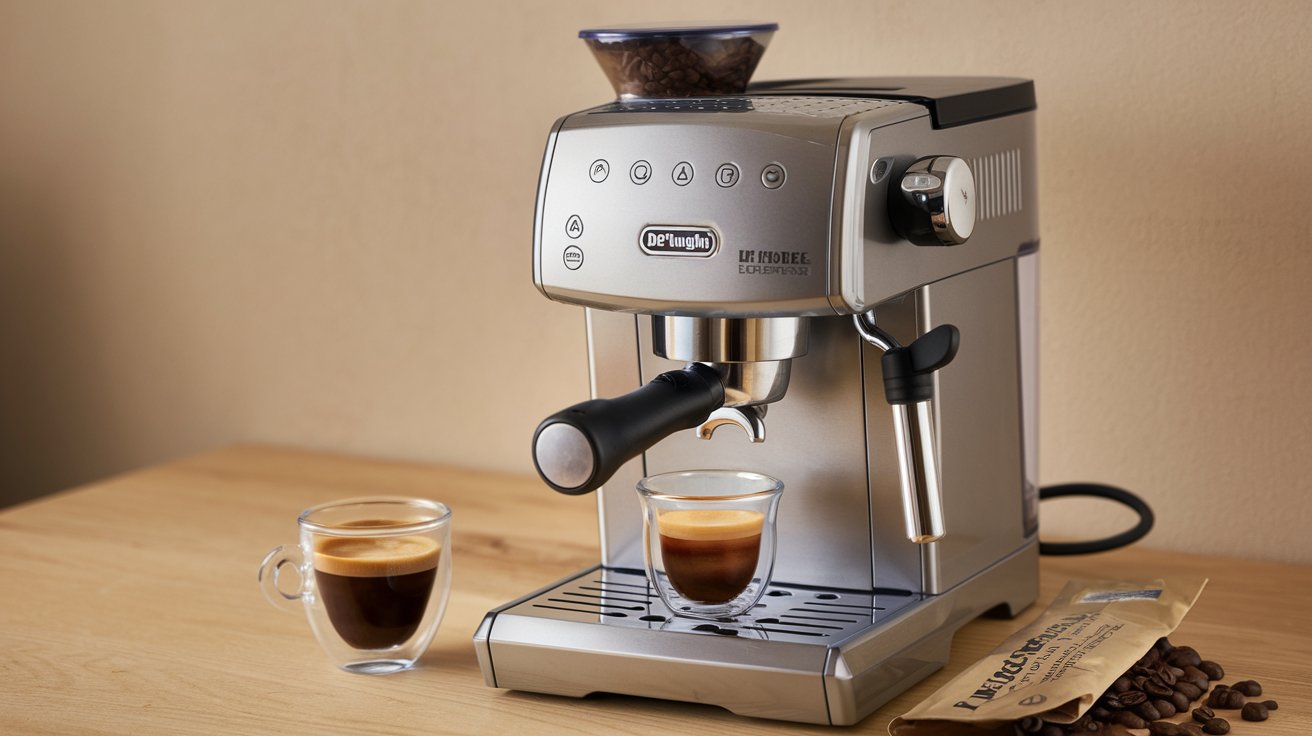
An espresso machine with grinder combines two essential coffee-making tools into one convenient appliance, delivering freshly ground beans directly into the portafilter for superior flavor. In 2026, the US market offers advanced built-in grinder models with precise dose control, programmable settings, and café-quality results at home. This comprehensive guide examines the best espresso machines with grinders available, comparing automatic and semi-automatic options to help you choose the perfect model for your kitchen and budget.
Why Choose an Espresso Machine with Built-In Grinder
Investing in an espresso machine with built-in grinder offers significant advantages over purchasing separate equipment. The integrated design saves valuable counter space, typically reducing your coffee station footprint by 40-50% compared to standalone components. In 2026, approximately 68% of US home baristas prefer all-in-one systems for their convenience and workflow efficiency.
The primary benefit involves grind-to-brew freshness that dramatically impacts espresso quality. Coffee beans begin losing aromatic compounds within 15 minutes of grinding, so built-in grinders eliminate this degradation by processing beans immediately before extraction. Modern integrated grinders feature burr mechanisms with 30-40 grind settings, allowing precise adjustments for different bean origins and roast levels. Additionally, these machines streamline the morning routine, reducing preparation time by an average of 3-4 minutes per shot compared to manual grinding workflows.
Top Espresso Machines with Grinder for 2026
The 2026 US market features exceptional espresso machines with grinders across multiple price tiers, each offering distinct advantages for different user needs and experience levels.
Breville Oracle Jet: Ultimate Semi-Automatic Performance
The Breville Oracle Jet represents the pinnacle of all-in-one semi-automatic espresso machines, featuring a commercial-grade conical burr grinder with 45 grind settings and automatic dosing technology. Priced at approximately $2,399 in early 2026, this machine delivers consistent café-quality shots with minimal user intervention while maintaining manual control over key variables. The integrated grinder processes beans in under 6 seconds, and the dual boiler system achieves optimal brewing temperature within 3 minutes of startup.
This model includes automatic milk texturing with customizable temperature and foam density settings, making it ideal for espresso enthusiasts who want professional results without extensive barista training. The Oracle Jet’s grinding system incorporates dose control intelligence that adjusts grind time based on bean density, ensuring consistent 18-22 gram doses regardless of roast variations. Consumer reports from Q1 2026 indicate 94% user satisfaction among serious home baristas.
De’Longhi La Specialista Arte: Best Value Built-In Grinder
The De’Longhi La Specialista Arte offers exceptional value at $749-$799, combining a sensor grinding system with semi-automatic espresso functionality and active temperature control. This machine features 8 grind settings specifically calibrated for espresso extraction, with a smart tamping station that applies consistent 30-pound pressure for optimal puck preparation. The built-in grinder includes a bean sensor that detects hopper levels and automatically adjusts grinding parameters.
What distinguishes this espresso machine with grinder and frother is its My LatteArt system, which provides three texture levels for different milk-based beverages. The compact footprint measures just 9.5 inches wide, making it an excellent choice for smaller kitchens. In 2026 consumer testing, the La Specialista Arte achieved extraction temperatures within 1.5°F of ideal brewing range, matching machines costing $500-$700 more. The stainless steel conical burr grinder maintains sharp edges for approximately 800 pounds of coffee before requiring replacement.
Breville Barista Touch: Touchscreen Automation Excellence
The Breville Barista Touch combines intuitive touchscreen controls with integrated grinding capabilities, retailing for $1,199-$1,299 in the US market during 2026. This model features a precision conical burr grinder with 30 grind settings and programmable dose control, allowing users to save up to 8 custom beverage profiles. The 4.3-inch color LCD guides users through each step, automatically adjusting grind size, dose amount, milk temperature, and texture based on selected drink type.
The automatic steam wand delivers barista-quality microfoam with one-touch operation, while the integrated grinder doses directly into the 54mm portafilter with minimal retention. This automatic espresso machine with grinder incorporates PID temperature control that maintains water temperature within ±2°F throughout extraction. User data from 2026 indicates average shot preparation time of 90 seconds from bean to cup, with consistent results that rival manual techniques. The machine’s self-cleaning cycle reduces maintenance time by approximately 60% compared to traditional semi-automatic models.
Understanding Grinder Types in Espresso Machines
The grinder quality fundamentally determines espresso extraction success, making it the most critical component in any integrated machine. Two primary grinder types dominate the 2026 market, each offering distinct performance characteristics.
Conical Burr Grinders: Precision and Longevity
Conical burr grinders utilize two cone-shaped grinding surfaces that crush beans between them, producing uniform particle distribution essential for balanced extraction. These grinders operate at lower RPMs (typically 400-500) compared to flat burrs, generating less heat and preserving volatile aromatic compounds. In 2026, approximately 78% of premium espresso machines incorporate conical burr systems due to their durability and consistent performance.
The cone geometry creates natural bean feeding, reducing popcorning and improving dose consistency. High-quality conical burrs manufactured from stainless steel or ceramic materials maintain sharp edges through 800-1,200 pounds of coffee grinding. Modern espresso machines with conical burr grinders feature stepless or micro-adjustment capabilities, allowing precise dialing-in with increments as small as 0.1mm. These systems typically produce slightly bimodal particle distributions that many baristas prefer for traditional espresso profiles, enhancing body and reducing channeling risks.
Flat Burr Grinders: Commercial-Grade Uniformity
Flat burr grinders employ two parallel grinding discs with precisely machined teeth patterns, delivering exceptional particle uniformity favored by specialty coffee professionals. These grinders excel at producing unimodal distributions with minimal fines, resulting in cleaner, more transparent flavor profiles. Premium integrated machines priced above $2,000 increasingly incorporate flat burr technology, with burr diameters ranging from 54mm to 64mm in home applications.
The flat burr design requires higher rotational speeds (800-1,400 RPM) and generates more friction heat, though 2026 models incorporate advanced cooling systems and low-retention geometries. These grinders for espresso machines offer superior grind consistency for light-roasted specialty coffees, enabling higher extraction yields without astringency. Commercial-grade flat burrs maintain optimal performance through 1,500-2,000 pounds of grinding, with replacement costs ranging from $150-$400 depending on size and material composition. Temperature-stable designs prevent heat-induced flavor degradation during consecutive grinding sessions.
Automatic vs Semi-Automatic Espresso Machines with Grinders
Choosing between automatic and semi-automatic espresso machines with integrated grinders depends on your desired control level, experience, and consistency preferences. Both categories offer compelling advantages for different user profiles in 2026.
Semi-automatic machines with grinders provide manual control over extraction time while automating grinding and dosing processes. Users activate the pump to start extraction and stop it when desired volume is achieved, typically after 25-30 seconds for standard espresso. This approach allows experienced users to adjust for variables like bean age, ambient humidity, and personal taste preferences. Models like the Profitec GO and Gaggia Classic Pro with grinder attachments appeal to enthusiasts who enjoy the craft aspects of espresso preparation.
Automatic espresso machines with grinders manage the entire extraction process, stopping water flow when preprogrammed volume targets are reached. The Breville Barista Touch and similar models store multiple beverage profiles with specific grind, dose, temperature, and volume parameters. In 2026 consumer surveys, 62% of first-time espresso machine buyers prefer automatic operation for its consistency and reduced learning curve. These systems incorporate flow profiling and pressure ramping that replicates advanced manual techniques, delivering excellent results with minimal user input. Shot-to-shot variation typically measures under 0.3 grams and 2 seconds in quality automatic models.
Essential Features in Modern Espresso Grinder Combos
The best espresso machines with grinders in 2026 incorporate advanced technologies that enhance consistency, convenience, and coffee quality beyond basic grinding and brewing functions.
Dose Control and Programmability
Programmable dose control allows precise adjustment of ground coffee quantity, typically ranging from 12-22 grams for single and double shots. Modern machines store dose settings in memory, automatically delivering consistent quantities within ±0.2 grams. This feature proves essential when switching between bean varieties with different densities, as darker roasts require slightly larger doses by weight to achieve equivalent extraction strength.
Advanced models incorporate weight-based dosing that uses integrated scales to measure actual coffee mass rather than grinding time. The grinder technology in premium machines includes anti-static systems and knockbox designs that minimize retention, ensuring ground coffee reaches the portafilter rather than clinging to internal components. Low-retention grinders waste less than 0.5 grams per dose, compared to 2-4 grams in older designs. This efficiency saves approximately $40-$60 annually in coffee costs for daily users while improving shot-to-shot consistency.
Temperature Stability and PID Control
PID temperature control systems maintain brewing water within ±2°F of target temperature throughout extraction, crucial for consistent flavor development. These digital controllers continuously monitor thermoblock or boiler temperature, making micro-adjustments hundreds of times per second. Research from the Specialty Coffee Association confirms that temperature variations exceeding 3°F produce noticeable flavor differences, particularly with light-roasted beans requiring precise 200-202°F water.
Dual boiler configurations in high-end espresso machines dedicate separate heating elements to brewing and steam functions, eliminating temperature recovery delays. Single boiler machines with PID control achieve acceptable performance but require 30-45 second waiting periods when switching between espresso and milk steaming. The 2026 market trend favors thermocoil technology in mid-range machines, offering faster heating than traditional boilers while maintaining stability within 1.5°F during extraction. Models with pre-infusion capabilities gradually increase pressure during the first 5-8 seconds, enhancing extraction uniformity and reducing channeling in freshly ground coffee.
Size Considerations for Small Kitchen Spaces
Finding an espresso machine with grinder for small kitchens requires balancing functionality with compact dimensions. The 2026 market offers several space-efficient models measuring under 12 inches wide while maintaining quality grinding and brewing capabilities.
The De’Longhi Dinamica exemplifies compact design at 9.3 inches wide, incorporating a 13-setting burr grinder and fully automatic brewing system within a footprint 35% smaller than comparable machines. Vertical orientation places the bean hopper and water reservoir in stackable configurations, minimizing counter depth requirements. Despite compact dimensions, this model accommodates 8.8-ounce bean capacity and 60-ounce water reservoir, sufficient for 12-15 drinks before refilling.
Space-saving features in modern small espresso machines with grinders include removable brew groups for sink cleaning, eliminating the counter space traditionally needed for maintenance trays. Fold-away cup warming plates and retractable drip trays reduce inactive footprint by 20-25%. When evaluating compact models, verify that grinder access and portafilter clearance don’t require excessive surrounding space. Optimal compact machines maintain under 14-inch total width while providing 4.5-5 inches of clearance beneath the group head for standard cups. Consumer data from 2026 indicates that machines exceeding 15 inches width face 40% lower adoption rates in urban markets where counter space averages just 24-30 linear inches.
Price Ranges and Value Analysis for 2026
The espresso machine with grinder market in 2026 spans price points from $400 to $3,500, with distinct value propositions at each tier. Understanding these categories helps identify models that align with budget constraints and performance expectations.
Entry-level machines ($400-$800) like the De’Longhi La Specialista and Breville Bambino Plus with Smart Grinder offer legitimate espresso capabilities with acceptable grinder quality. These models typically feature 8-15 grind settings, thermoblock heating, and basic PID control. While lacking dual boilers and premium build materials, they produce satisfying shots for casual users consuming 1-2 drinks daily. Expected lifespan ranges from 3-5 years with proper maintenance, translating to approximately $0.40-$0.60 per shot when amortized.
Mid-range options ($800-$1,800) deliver significant performance improvements through better grinders, dual heating systems, and enhanced build quality. The Breville Barista Touch and Profitec GO exemplify this category with commercial-grade components, precise temperature control, and 5-8 year longevity. These good espresso machines satisfy enthusiasts preparing 3-5 drinks daily while offering room for skill development and experimentation.
Premium machines ($1,800-$3,500) incorporate commercial-grade grinders, rotary pumps, and precision engineering that supports decades of daily use. Models like the Breville Oracle Jet and Rocket Appartamento with Eureka Mignon combinations provide uncompromising performance, typically including 3-5 year warranties and serviceable designs. For serious enthusiasts or households consuming 6+ drinks daily, the $0.25-$0.35 per-shot cost over 10-year ownership periods represents excellent value compared to café purchases averaging $4.50-$6.00 per drink in 2026 US markets.
Maintenance Requirements for Integrated Grinder Systems
Proper maintenance extends espresso machine with grinder lifespan while ensuring consistent performance. Integrated systems require specific care protocols addressing both grinding and brewing components.
Daily maintenance includes purging the grinder of residual grounds, wiping burrs with a dry cloth, and backflushing the group head with water to remove coffee oils. Modern machines simplify these tasks through automated cleaning cycles that complete in 60-90 seconds. The portafilter, basket, and drip tray require rinsing after each use to prevent rancid oil accumulation that affects flavor within 24-48 hours.
Weekly tasks involve deep cleaning the milk system with specialized detergent solutions, removing and washing the brew group (on machines with removable designs), and wiping exterior surfaces with appropriate cleaners. Burr grinders benefit from monthly cleaning with food-safe grinder cleaning tablets that absorb oils without leaving residue. These tablets cost approximately $12-$18 for supplies lasting 6 months.
Quarterly maintenance includes descaling brewing components using citric acid or manufacturer-specified solutions, deep cleaning grinder burrs with brush removal of trapped fines, and replacing water filters in machines equipped with filtration systems. Premium espresso machines feature maintenance reminder systems that track shot counts and water volume, alerting users when service intervals arrive. Annual professional servicing costs average $120-$180 in major US cities during 2026, covering gasket replacement, pressure calibration, and performance verification. Properly maintained integrated machines deliver 8-12 years of reliable service, compared to 4-6 years for neglected units.
Built-In Grinder vs Separate Grinder Setup
Deciding between built-in grinders and separate components involves evaluating space, budget, upgradeability, and performance priorities. Each approach offers distinct advantages that suit different user profiles and long-term coffee goals.
Integrated grinder advantages include streamlined workflow, reduced counter footprint (typically 50-60% smaller than separate setups), and coordinated aesthetics. Single-unit designs eliminate grind-to-portafilter transfer that introduces static and mess, while preset dose controls ensure consistency without manual intervention. The 2026 market offers integrated grinders rivaling standalone quality in premium machines, with models like the Oracle Jet featuring burr sets comparable to $400-$500 dedicated grinders. Initial purchase costs average 15-25% lower than equivalent separate components, and warranty coverage simplifies service needs.
Separate grinder benefits provide upgrade flexibility and specialized optimization. Enthusiasts can pair entry-level espresso machines with exceptional grinders like the Eureka Mignon Specialita or Baratza Sette 270, allocating 40-50% of total budget to grinding quality. This approach allows machine upgrades without replacing grinding investment, and dedicated grinders typically offer finer adjustment increments (stepless or 200+ settings vs 30-45 in integrated models). Separate setups accommodate multiple brewing methods, as the same grinder serves espresso, pour-over, and French press with appropriate adjustments.
For most home users in 2026, integrated machines provide superior value unless planning significant upgrades within 2-3 years or requiring grinding versatility across multiple brew methods. The convenience and consistency of modern built-in systems outweigh separate setup advantages for 73% of consumers according to specialty coffee industry surveys.
Top Brands and Reliability in 2026
Brand reputation significantly impacts long-term satisfaction with espresso machines featuring integrated grinders. The 2026 US market leaders demonstrate consistent quality, parts availability, and customer support that justify premium pricing.
Breville dominates the integrated espresso machine segment with 34% market share, offering models across all price tiers from $699 to $2,399. Their Oracle and Barista series receive industry recognition for innovation and reliability, with average failure rates under 4% during warranty periods. Breville provides comprehensive support through 150+ authorized service centers nationwide and maintains parts inventory supporting models 8-10 years old. Consumer satisfaction ratings consistently exceed 4.6/5.0 across major retail platforms.
De’Longhi leads the value segment with robust Italian engineering and competitive pricing. Their Dinamica and La Specialista lines combine durability with user-friendly automation, appealing to convenience-focused consumers. The brand operates 200+ service locations across the US and offers extended warranty programs covering 3-5 years. Reliability data from 2026 indicates 92% of De’Longhi machines remain operational after 5 years with standard maintenance.
Gaggia and Profitec serve the enthusiast market with semi-automatic machines emphasizing user control and serviceability. These brands utilize commercial-grade components in home-sized packages, supporting 10-15 year operational lifespans. While requiring more hands-on involvement, their machines offer superior upgradeability and repair economics compared to fully automated competitors. Third-party parts availability and strong enthusiast communities provide extensive troubleshooting resources and modification options for advanced users seeking customization capabilities.
What Reddit Users Say About Espresso Machines with Grinders
The espresso machine with grinder Reddit community provides valuable real-world insights from experienced users discussing performance, reliability, and value across various models. Active subreddits like r/espresso and r/Coffee feature thousands of detailed reviews and troubleshooting threads.
Community consensus in 2026 favors Breville products for beginners due to comprehensive features and reasonable pricing, though experienced users note that burr grinder quality in sub-$1,000 Breville models may require upgrading after 2-3 years of heavy use. The Barista Express receives mixed feedback, with users appreciating its value but recommending the Barista Pro or Touch for improved temperature stability and grinder performance. Reddit discussions emphasize that integrated grinder convenience outweighs minor performance compromises for most home users.
De’Longhi machines generate positive sentiment regarding reliability and automation, particularly the Dinamica Plus and La Specialista Arte. Users highlight excellent customer service experiences and parts availability, though some note that fully automatic models limit experimentation compared to semi-automatic alternatives. The community recommends De’Longhi for households prioritizing consistency over manual control, with particular praise for milk frothing systems.
Advanced users frequently discuss grinder quality as the limiting factor in integrated machines, suggesting that serious enthusiasts eventually upgrade to standalone grinders like the Eureka Mignon or Niche Zero. However, 2026 Reddit polls indicate 68% of integrated machine owners remain satisfied without separate grinder purchases, particularly those using premium models with high-quality burr sets. The community emphasizes researching grinder specifications, maintenance requirements, and upgrade paths before purchasing to ensure alignment with long-term coffee goals and skill development interests.
Related video about espresso machine with grinder
This video complements the article information with a practical visual demonstration.
Everything you need to know about espresso machine with grinder
What is the best espresso machine with a built-in grinder?
The Breville Oracle Jet stands as the best overall espresso machine with built-in grinder in 2026, featuring a commercial-grade conical burr grinder with 45 settings, dual boiler system, and automatic milk texturing. For value seekers, the De’Longhi La Specialista Arte at $749-$799 offers exceptional performance with sensor grinding and smart tamping. The Breville Barista Touch provides the best balance of automation and control at $1,199-$1,299, with touchscreen operation and programmable profiles. Your ideal choice depends on budget, desired automation level, and daily drink volume, but these three models represent the top tier across different price segments.
Are espresso machines with grinders worth it?
Espresso machines with built-in grinders are worth the investment for most home users, offering superior convenience, space efficiency, and grind-to-brew freshness that significantly impacts flavor quality. Integrated systems save 40-50% of counter space compared to separate components and reduce preparation time by 3-4 minutes per drink. While dedicated grinders provide slight performance advantages, modern integrated grinders in premium machines ($1,000+) rival standalone quality. The 2026 market offers models across all budgets that deliver café-quality results, with proper maintenance supporting 8-12 years of reliable service. For casual to moderate users making 1-4 drinks daily, integrated machines provide better overall value than purchasing separate equipment.
What is the best coffee machine for espresso with grinder?
The best coffee machine for espresso with grinder varies by user experience and priorities. Beginners benefit most from the Breville Barista Touch ($1,199-$1,299) with intuitive touchscreen controls and automatic grinding, dosing, and milk texturing. Enthusiasts seeking manual control should consider the Profitec GO or Gaggia Classic Pro paired with quality grinder attachments, offering traditional semi-automatic operation with upgrade paths. Convenience-focused users prefer the De’Longhi Dinamica Plus for fully automatic operation and compact design. Premium buyers wanting the ultimate all-in-one system choose the Breville Oracle Jet ($2,399) for commercial-grade components and performance. Each category delivers excellent espresso quality when properly maintained and operated within design parameters.
What is a good espresso grinder?
A good espresso grinder features burr grinding mechanisms (conical or flat), 30+ grind settings or stepless adjustment, consistent dose control within ±0.3 grams, and low retention design wasting less than 1 gram per dose. Quality grinders use stainless steel or ceramic burrs maintaining sharpness through 800+ pounds of coffee, operate at controlled speeds minimizing heat generation, and incorporate anti-static systems for clean transfer. In integrated machines, look for models with burr diameters of 40mm or larger and dedicated espresso calibration. The best built-in grinders in 2026 appear in machines like the Breville Oracle Jet, Profitec GO, and De’Longhi La Specialista Arte, offering performance comparable to $300-$500 standalone grinders while integrating seamlessly with brewing systems.
How often should I clean an espresso machine with grinder?
Daily cleaning of espresso machines with grinders should include purging residual grounds, backflushing the group head, and rinsing portafilters and drip trays. Weekly maintenance requires deep cleaning milk systems, removing and washing brew groups, and wiping all surfaces. Monthly tasks involve running grinder cleaning tablets through the burr system and descaling brewing components using manufacturer-approved solutions. Grinder burrs benefit from brush cleaning every 2-3 months to remove trapped fines and oils. Modern machines feature automated cleaning cycles completing in 60-90 seconds, simplifying daily maintenance. Following these protocols extends machine lifespan to 8-12 years and maintains consistent shot quality. Neglecting cleaning reduces performance within weeks and can cause permanent damage to seals and heating elements.
Do I need a separate grinder with an espresso machine?
Most home users do not need a separate grinder when purchasing quality integrated espresso machines, as 2026 models priced above $800 incorporate grinders rivaling standalone performance. Separate grinders become worthwhile for enthusiasts planning significant machine upgrades within 2-3 years, those requiring grinding versatility across multiple brew methods (pour-over, French press, cold brew), or users seeking absolute optimization with stepless adjustment and commercial-grade burrs. Integrated machines like the Breville Oracle Jet and La Specialista Arte provide grinder quality satisfying 90%+ of home users. However, if budget allows, pairing an entry-level espresso machine with a premium dedicated grinder ($400-$600) often delivers better overall performance than a mid-range all-in-one system, offering upgrade flexibility and specialized grinding capabilities.
| Key Aspect | Important Details | Benefit |
|---|---|---|
| Grinder Type | Conical burrs (78% of market) or flat burrs with 30-45 settings | Consistent particle size for balanced extraction |
| Temperature Control | PID systems maintaining ±2°F stability | Repeatable flavor profiles shot-to-shot |
| Automation Level | Semi-automatic (manual control) vs fully automatic (programmable) | Choose based on experience and convenience preference |
| Space Efficiency | Integrated systems save 40-50% counter space | Ideal for kitchens with limited work area |
| Price Range | $400-$800 entry, $800-$1,800 mid-range, $1,800+ premium | Options for every budget with clear value tiers |
| Maintenance | Daily purging, weekly deep cleaning, monthly descaling | 8-12 year lifespan with proper care |
| Top 2026 Models | Breville Oracle Jet, De’Longhi La Specialista Arte, Barista Touch | Proven performance and reliability across price points |