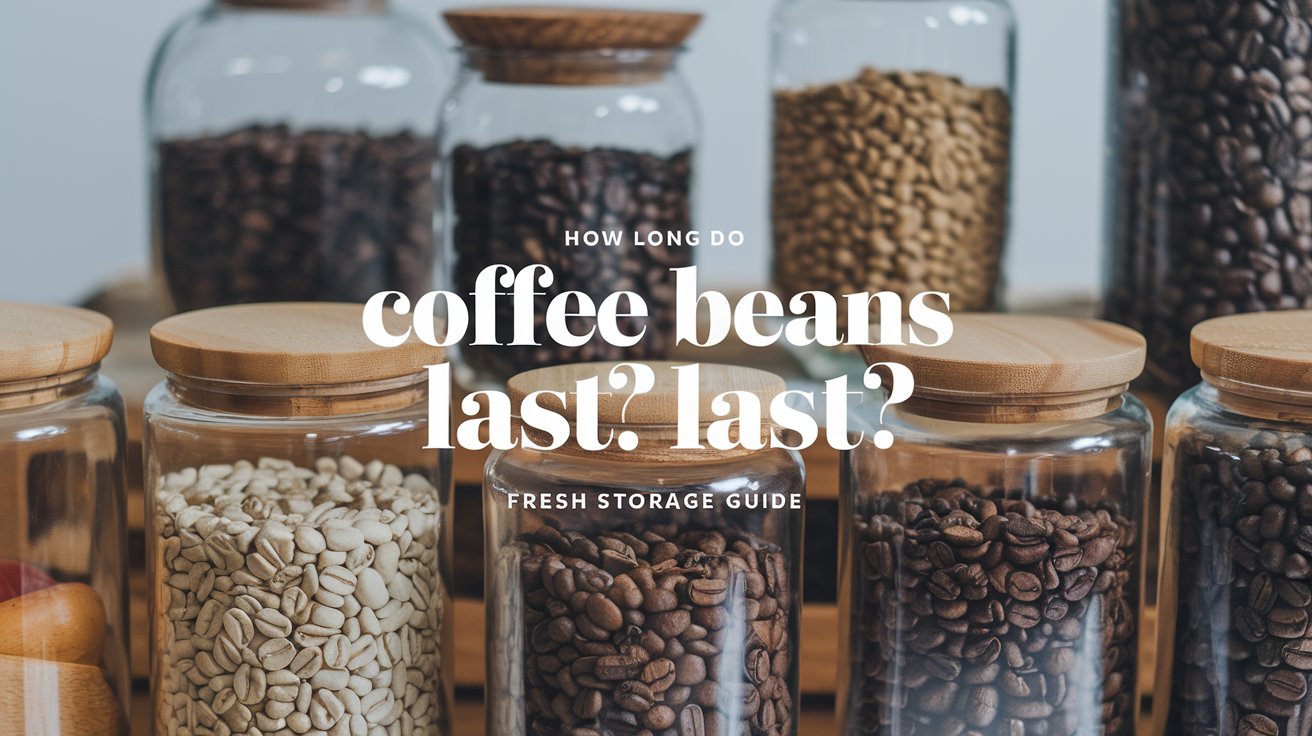
Coffee beans typically last 6 months when stored properly in an unopened bag, but their peak flavor diminishes much sooner. Once opened, whole beans maintain optimal freshness for just 2-4 weeks, while ground coffee deteriorates within days. Understanding proper storage methods and freshness indicators can dramatically extend your coffee’s lifespan and preserve that rich, aromatic flavor you expect from premium beans. This comprehensive guide reveals exactly how long different coffee types last and what you can do to maximize freshness.
Quick Answer: Coffee Bean Shelf Life Timeline
The lifespan of coffee beans depends heavily on storage conditions and packaging. Unopened bags with one-way valves can preserve beans for 6-9 months past the roast date, though flavor quality peaks within the first month. Once you break the seal, oxidation accelerates rapidly, and whole beans begin losing their aromatic compounds within 2-4 weeks under ideal conditions.
Ground coffee deteriorates even faster because increased surface area exposes more oils to oxygen. Pre-ground coffee loses noticeable flavor within 7-10 days of opening, which explains why coffee enthusiasts insist on grinding beans immediately before brewing. In the United States, where 62% of adults drink coffee daily according to 2026 National Coffee Association data, understanding these timelines can significantly improve your daily cup quality and reduce waste from stale beans.
The Science Behind Coffee Bean Freshness
Coffee freshness revolves around volatile aromatic compounds that create coffee’s distinctive flavor profile. During roasting, beans develop over 1,000 different aromatic compounds through complex chemical reactions. These compounds begin evaporating immediately after roasting, with the most volatile escaping within hours. The degassing process releases carbon dioxide trapped during roasting, which is why specialty roasters include one-way valves on bags to release CO2 while preventing oxygen entry.
Oxidation represents the primary enemy of coffee freshness. When oxygen molecules interact with coffee oils, they trigger rancidification that produces stale, flat, or even sour flavors. Light exposure accelerates this breakdown by providing energy for oxidative reactions, while moisture introduces the risk of mold growth and accelerates staleness. Temperature fluctuations cause condensation inside storage containers, creating an environment where oils degrade faster and off-flavors develop more rapidly than in stable conditions.
How Long Different Coffee Types Last
Understanding the shelf life variations between coffee types helps you make informed purchasing decisions and optimize storage strategies for your specific preferences and consumption patterns.
Whole Bean Coffee Longevity
Whole bean coffee maintains structural integrity that protects internal oils and aromatics far better than ground alternatives. Unopened bags stored in cool, dark conditions preserve acceptable quality for 6-9 months, though connoisseurs notice flavor degradation after just 3-4 weeks past roasting. Once opened, whole beans retain peak freshness for 2-4 weeks when stored properly in airtight containers away from light, heat, and moisture. Many specialty roasters in the United States now include roast dates rather than expiration dates, recognizing that true freshness windows are much shorter than food safety timelines suggest.
Ground Coffee Shelf Life
Pre-ground coffee experiences exponentially faster degradation due to dramatically increased surface area exposed to oxygen. Unopened packages maintain acceptable quality for 3-5 months past roasting, but once opened, noticeable staleness develops within 7-10 days even with careful storage. The convenience of pre-ground coffee comes at a significant flavor cost, which is why coffee experts recommend grinding only what you need for each brewing session. In commercial settings across the United States, high-volume cafes often use beans within 48 hours of grinding to maintain consistent quality standards.
Instant Coffee Duration
Instant coffee defies typical freshness rules because the freeze-drying or spray-drying process removes moisture that accelerates degradation. Unopened instant coffee can last 2-20 years depending on packaging quality, though flavor gradually diminishes over time. Once opened, instant coffee remains usable for 12-18 months when stored in airtight containers, making it the most shelf-stable coffee option available. While purists dismiss instant coffee for lacking complexity, its extended shelf life makes it practical for emergency supplies or infrequent coffee drinkers throughout the United States.
Factors That Influence Coffee Bean Lifespan
Multiple environmental and processing factors determine how quickly your coffee beans lose their desirable characteristics and develop stale or off flavors that diminish your brewing experience.
Roast Level Impact on Shelf Life
Darker roasts paradoxically have shorter shelf lives than lighter roasts despite appearing more stable. The extended roasting process brings more oils to the bean surface, creating larger surface areas for oxidation. These surface oils turn rancid faster when exposed to oxygen, producing harsh, bitter flavors. Light and medium roasts retain oils internally longer, preserving freshness for additional weeks. According to 2026 specialty coffee research, light roasts can maintain peak flavor for 4-6 weeks post-roast, while dark roasts show noticeable degradation after just 2-3 weeks under identical storage conditions.
Packaging Quality and Valve Systems
Modern coffee packaging employs one-way degassing valves that revolutionized coffee distribution by allowing CO2 release without permitting oxygen entry. Bags with these valves preserve beans significantly longer than standard packaging, extending acceptable shelf life from weeks to months. Vacuum-sealed packaging offers even better protection by removing oxygen entirely before sealing, though beans must complete most degassing first. Premium roasters in the United States increasingly use nitrogen flushing, which replaces oxygen with inert nitrogen gas before sealing, providing maximum protection for specialty beans during shipping and storage.
Origin and Processing Methods
Coffee bean origin and processing significantly affect inherent oil content and moisture levels that influence longevity. Natural processed beans retain more fruit sugars and oils, making them more susceptible to staleness than washed processed varieties. High-grown beans from regions like Ethiopian highlands typically have denser cellular structures that protect aromatic compounds longer than lower-elevation beans. Single-origin specialty coffees often command premium prices partly because careful processing preserves the delicate flavors that deteriorate quickly, requiring faster consumption after roasting compared to commodity-grade blends designed for extended shelf stability.
Best Practices for Storing Coffee Beans
Implementing proper storage techniques can extend your coffee’s peak flavor window by several weeks and prevent premature staleness that wastes money and diminishes your daily coffee ritual.
Optimal Storage Containers
The ideal coffee storage container features airtight seals, opaque materials, and appropriate sizing to minimize oxygen exposure. Glass jars work only when stored in completely dark cabinets, as transparent materials allow light damage. Ceramic containers with rubber-sealed lids provide excellent protection, while stainless steel canisters with CO2 release valves represent the gold standard for home storage. Size matters significantly because containers should be nearly full, minimizing air space that accelerates oxidation. Coffee enthusiasts in the United States increasingly invest in vacuum-sealed containers that actively remove air, extending peak freshness from 2-4 weeks to 4-6 weeks for whole beans.
Temperature and Location Considerations
Store coffee beans in cool, stable environments between 50-70°F away from appliances that generate heat. Kitchen cabinets near stoves or dishwashers create temperature fluctuations that accelerate staleness through condensation cycles. Pantries, basement storage areas, or dedicated coffee stations in climate-controlled rooms provide ideal conditions. Avoid windowsills or countertops exposed to direct sunlight, which heats beans and degrades oils through photodegradation. The 2026 Specialty Coffee Association recommends storing beans at least 10 feet from heat sources and maintaining consistent temperatures to preserve aromatic compounds throughout their usable lifespan.
The Refrigerator and Freezer Debate
Refrigerator storage remains controversial among coffee experts because moisture and odor absorption risks often outweigh temperature benefits. Refrigerators maintain high humidity that causes condensation when beans warm to room temperature, introducing moisture that destroys flavor. Additionally, coffee beans readily absorb surrounding odors from foods, resulting in contaminated flavors. Freezer storage works only for long-term preservation of unopened, vacuum-sealed bags, where beans can maintain quality for 6-12 months. Once removed from freezing, beans must be used completely without refreezing, and they should warm to room temperature before opening containers to prevent condensation damage.
Recognizing Stale and Bad Coffee Beans
Developing the ability to identify staleness through sensory evaluation protects you from disappointing brews and helps you adjust purchasing quantities to match actual consumption patterns.
Visual inspection reveals important clues about bean condition. Fresh beans display slight oil sheen without excessive surface greasiness, while stale beans appear dull and dry. Check for uniformity in color and size, as inconsistent beans suggest quality control issues. Any visible mold, white spots, or unusual discoloration indicates moisture contamination requiring immediate disposal. Smell provides the most reliable freshness test because aromatic compound loss is the primary staleness indicator. Fresh beans release strong, pleasant aromas when you open the container, while stale beans smell flat, musty, or display no aroma whatsoever.
Tactile and brewing tests confirm suspicions from visual and olfactory assessments. Fresh beans feel slightly oily and produce audible cracks when bitten, while stale beans feel dry and crumble easily. During brewing, fresh coffee creates robust bloom with significant expansion as CO2 releases, whereas stale coffee barely swells and produces weak crema in espresso applications. The resulting brew from stale beans tastes flat, sour, or displays papery characteristics completely absent in fresh coffee. According to 2026 consumer research in the United States, most coffee drinkers cannot identify staleness until beans are 6-8 weeks past peak freshness, missing the optimal flavor window entirely.
How Long Do Coffee Beans Last After Expiration Date
Coffee expiration dates represent quality guidelines rather than safety cutoffs, as properly stored beans remain safe to consume long after printed dates. Manufacturers typically print dates 6-12 months from packaging, providing conservative estimates that account for various storage conditions. Beans remain drinkable for months or even years past these dates without health risks, though flavor quality deteriorates progressively.
Understanding the difference between roast dates and expiration dates clarifies realistic freshness expectations. Specialty roasters print roast dates allowing consumers to calculate actual age, while commercial brands use best-by dates focused on legal liability rather than peak flavor. Unopened bags maintain acceptable quality for 3-6 months past expiration dates when stored properly, while opened bags should be consumed within 4-6 weeks regardless of printed dates. In the United States, food safety regulations don’t require expiration dates on coffee because it poses minimal health risks, making date interpretation more about quality preferences than safety concerns.
How Long Do Coffee Beans Last Unopened vs Opened
The dramatic difference between unopened and opened shelf life stems from oxygen exposure that triggers immediate degradation processes once packaging seals break. Unopened bags with proper valve systems maintain protective atmospheres that preserve beans significantly longer than any home storage method.
Unopened coffee beans in valve-equipped bags last 6-9 months while maintaining acceptable quality, though peak flavor occurs within 4-6 weeks of roasting. Premium nitrogen-flushed packaging extends this timeline to 12 months for commodity-grade beans, though specialty beans still show degradation after 2-3 months. Once opened, the countdown accelerates dramatically as oxygen floods the container, reducing optimal freshness to just 2-4 weeks for whole beans and 7-10 days for ground coffee. This disparity explains why bulk purchasing requires careful calculation to avoid waste, especially for single-person households across the United States where consumption rates may not justify large quantities.
Maximizing Coffee Bean Freshness at Home
Implementing strategic purchasing and storage habits can ensure you consistently enjoy coffee at peak freshness rather than settling for degraded flavors from improper handling or excessive stockpiling.
Buy coffee in quantities matching 2-3 week consumption rates to ensure you finish bags near peak freshness. Calculate your daily consumption and multiply by 21 days to determine ideal purchase sizes. Local roasters throughout the United States often sell by the quarter-pound or half-pound, accommodating smaller households better than standard 12-ounce or pound bags from commercial sources. Subscribe to delivery services that ship freshly roasted beans on regular schedules matching your consumption, eliminating guesswork and ensuring consistent quality.
Invest in quality storage equipment and proper grinding practices that preserve freshness between brewing sessions. Purchase airtight containers sized appropriately for your typical quantities, and consider multiple smaller containers rather than one large vessel. Grind beans immediately before brewing rather than pre-grinding weekly batches, as ground coffee loses flavor 5-7 times faster than whole beans. Keep dedicated coffee storage areas away from spices, cleaning products, or other aromatic items that beans might absorb. Monitor roast dates or opening dates with labels on containers, helping you track freshness and adjust purchasing patterns based on actual consumption speeds observed over several months.
The 15-15-15 Coffee Rule Explained
The 15-15-15 rule provides a simplified framework for understanding coffee freshness timelines that helps casual consumers make better purchasing and storage decisions without requiring expert knowledge or complicated calculations.
This guideline suggests coffee tastes best within 15 days of roasting, remains good for 15 weeks when stored properly, and stays safe for 15 months past roasting. While these numbers simplify complex degradation processes, they offer practical benchmarks for different quality expectations. The first 15 days represent peak flavor when aromatic compounds remain most vibrant, ideal for specialty brewing methods highlighting subtle notes. The 15-week window acknowledges that properly stored beans maintain acceptable daily drinking quality for casual consumers who prioritize convenience over perfection.
The final 15-month timeline addresses safety rather than quality, indicating that coffee poses no health risks even when significantly stale. However, coffee this old produces flat, papery brews lacking any desirable characteristics beyond basic caffeine delivery. Many coffee professionals in the United States consider this rule too generous, preferring stricter 4-week peak freshness windows and 3-month maximum storage periods for maintaining quality standards. Adapt this rule to your palate sensitivity, storage conditions, and consumption purposes, recognizing that espresso and specialty brewing demand fresher beans than everyday drip coffee.
Can You Use Old Coffee Beans
Old coffee beans remain perfectly safe to consume but deliver increasingly disappointing sensory experiences as they age beyond recommended freshness windows. No toxic compounds develop in stale coffee, though rancid oils can cause minor digestive discomfort in sensitive individuals when beans reach extreme ages of 12-24 months.
Brewing with old beans produces weak, flat coffee lacking the complexity and vibrancy of fresh alternatives. Stale beans yield brews with papery, cardboard-like flavors and hollow mouthfeel devoid of the oils that create satisfying body. The caffeine content remains virtually unchanged, so old beans still provide the stimulant effects many drinkers prioritize. For individuals focused solely on caffeine rather than flavor, 6-12 month old beans serve adequately despite compromised taste profiles.
Consider creative uses for beans too old for quality brewing but not yet ready for disposal. Coffee grounds make excellent garden compost, adding nitrogen to soil and deterring certain pests. Old beans work well in cold brew applications where long extraction times and cold temperatures minimize stale flavors while extracting caffeine and remaining flavor compounds. Some home brewers blend small amounts of old beans with fresh purchases, stretching supplies during shortages while maintaining acceptable flavor through dilution. In the United States, sustainability-focused consumers increasingly repurpose old beans for crafts, natural deodorizers, or body scrubs rather than discarding them, reducing waste while acknowledging they’ve passed optimal brewing windows.
Related video about how long do coffee beans last
This video complements the article information with a practical visual demonstration.
What you should know
Are 10 year old coffee beans still good?
Ten-year-old coffee beans are safe to consume but deliver extremely poor flavor quality. While they pose no health risks, the beans will be completely stale with flat, cardboard-like taste and no aromatic characteristics. All volatile flavor compounds will have dissipated, leaving only basic caffeine content. The oils will have turned rancid, potentially causing minor digestive discomfort. These beans work better for composting or craft projects than brewing, as the resulting coffee will be unpleasant regardless of brewing method. Coffee reaches maximum staleness within 12-18 months, meaning decade-old beans offer no advantages over 2-year-old beans and should be replaced with fresh alternatives.
Can I use 2 year old coffee beans?
You can safely use 2-year-old coffee beans, but expect significantly compromised flavor compared to fresh alternatives. The beans will produce weak, flat coffee with papery or musty notes and minimal aroma. While the caffeine content remains largely intact, all desirable flavor compounds will have degraded substantially. These beans work best in cold brew applications where extraction time and temperature minimize stale flavors, or blended with fresh beans to stretch supplies. If the beans show no visible mold or unusual odors beyond typical staleness, they remain safe for consumption. However, replacing them with fresh beans will dramatically improve your coffee experience and better justify the effort invested in brewing.
What is the 15-15-15 coffee rule?
The 15-15-15 coffee rule is a simplified freshness guideline stating coffee tastes best within 15 days of roasting, remains acceptable for 15 weeks when properly stored, and stays safe for 15 months. This framework helps consumers understand basic freshness timelines without requiring expert knowledge. The first 15 days represent peak flavor for specialty brewing, the 15-week window covers daily drinking quality, and the 15-month timeline addresses safety rather than taste. Many coffee professionals consider this rule too lenient, preferring 4-week peak freshness and 3-month maximum storage periods. Adapt this guideline to your taste sensitivity, brewing methods, and storage conditions for best results.
How do you know if coffee beans go bad?
Identify bad coffee beans through multiple sensory indicators. Visually inspect for mold, white spots, or unusual discoloration indicating moisture contamination requiring immediate disposal. Fresh beans display slight oil sheen, while stale beans appear dull and excessively dry or greasy. Smell provides the most reliable test because fresh beans release strong, pleasant aromas, whereas stale beans smell flat, musty, or produce no aroma. During brewing, fresh coffee creates robust bloom with expansion, while stale coffee barely swells. The resulting brew tastes flat, sour, or papery compared to fresh coffee’s complex, vibrant flavors. If beans are older than 6-8 weeks past roasting or show any of these signs, they’ve passed peak quality.
How long do coffee beans last in the fridge?
Storing coffee beans in the refrigerator is not recommended because the high humidity causes condensation when beans warm to room temperature, introducing moisture that destroys flavor and promotes mold growth. Additionally, coffee readily absorbs odors from surrounding foods, resulting in contaminated flavors that ruin your brew. If you must refrigerate beans, use completely airtight, opaque containers and allow them to reach room temperature before opening to prevent condensation. However, proper room temperature storage in cool, dark, stable environments between 50-70°F preserves beans better than refrigeration. Reserve freezer storage only for long-term preservation of unopened, vacuum-sealed bags where beans can maintain quality for 6-12 months without the humidity issues refrigerators create.
How long do whole coffee beans last once opened?
Whole coffee beans last 2-4 weeks once opened when stored properly in airtight, opaque containers away from light, heat, and moisture. Peak flavor occurs within the first 2 weeks, with gradual degradation continuing through week 4. After one month, noticeable staleness develops as aromatic compounds dissipate and oils oxidize, producing flat or sour flavors. Storage quality significantly impacts this timeline because exposure to oxygen accelerates degradation. Premium vacuum-sealed containers can extend peak freshness to 4-6 weeks by minimizing oxygen contact. Darker roasts deteriorate faster than lighter roasts due to surface oils, potentially losing quality after just 2-3 weeks. For best results, purchase quantities matching 2-3 week consumption rates and grind beans immediately before brewing.
| Storage Condition | Shelf Life Duration | Quality Retention |
|---|---|---|
| Unopened Whole Beans (Valve Bag) | 6-9 months | Acceptable quality, peak flavor within 4-6 weeks |
| Opened Whole Beans (Airtight Container) | 2-4 weeks | Peak freshness first 2 weeks, noticeable decline after 4 weeks |
| Opened Ground Coffee | 7-10 days | Rapid degradation, minimal freshness retention |
| Unopened Instant Coffee | 2-20 years | Excellent stability, gradual flavor loss over time |
| Freezer Storage (Vacuum-Sealed) | 6-12 months | Good preservation for long-term storage needs |
| Refrigerator Storage | Not recommended | Moisture and odor absorption risks outweigh benefits |