The perfect pour over coffee ratio is the foundation of exceptional coffee brewing. In 2026, coffee enthusiasts across the United States rely on the golden ratio of 1:15 to 1:17 (coffee to water) to achieve consistently delicious results. This comprehensive guide covers precise measurements in grams, tablespoons, and milliliters, helping you brew cafe-quality coffee at home. Whether you’re making a single cup or brewing for two, understanding the proper coffee-to-water ratio transforms your morning routine into a craft worth mastering.
Understanding the Standard Pour Over Coffee Ratio
The standard pour over coffee ratio recommended by specialty coffee professionals in 2026 ranges from 1:15 to 1:17, meaning one gram of coffee for every 15 to 17 grams (or milliliters) of water. This ratio has become the industry benchmark across the United States, endorsed by the Specialty Coffee Association and practiced in leading third-wave coffee shops. For most home brewers, a 1:16 ratio provides the ideal balance between extraction, flavor clarity, and body that highlights the coffee’s unique characteristics without overwhelming bitterness or undesirable sourness.
In practical terms, this translates to using 30 grams of coffee with 480ml of water for a standard 16-ounce serving. The beauty of this ratio lies in its scalability—whether you’re brewing a single cup or multiple servings, maintaining this proportion ensures consistent results. For those preferring tablespoon measurements, approximately 2 tablespoons of ground coffee per 6 ounces (180ml) of water achieves similar results, though gram-based precision delivers superior consistency. The ratio’s flexibility allows adjustments based on personal taste preferences, bean origin, and roast level.
Pour Over Coffee Ratio in Grams: The Precision Method
Using a digital kitchen scale for gram measurements represents the most accurate approach to pour over brewing in 2026. Professional baristas and home enthusiasts alike recognize that weight-based measurements eliminate variables that volume measurements introduce, such as grind size affecting density and ambient humidity impacting coffee beans. A standard starting point uses 22 grams of coffee with 350ml of water for a 12-ounce cup, or 30 grams with 480ml for a larger 16-ounce serving, both maintaining the optimal 1:16 ratio.
The gram-based approach allows precise experimentation and repeatability. Coffee enthusiasts in the United States have adopted digital scales with 0.1-gram accuracy, priced between $15 and $40 in 2026, as essential brewing tools. When adjusting for different bean origins, lighter roasts often benefit from ratios closer to 1:17 for enhanced clarity, while darker roasts perform well at 1:15 for fuller body. Recording your recipes in grams creates a reliable reference library, enabling you to replicate exceptional brews and share recipes with fellow coffee lovers with absolute precision.
Pour Over Coffee Ratio for One Cup
Brewing a perfect single cup of pour over coffee requires proportional scaling of the standard ratio. For a typical 12-ounce cup, the ideal measurement is 22 grams of coffee to 350ml of water, maintaining the 1:16 ratio that delivers balanced extraction. Single-cup brewing in 2026 has become increasingly popular among United States remote workers and coffee enthusiasts who prioritize freshness and quality over quantity, with the Hario V60 and Kalita Wave being the most popular single-serve pour over devices.
For those preferring smaller servings, an 8-ounce cup requires approximately 15 grams of coffee with 240ml of water. The key consideration for single-cup brewing is maintaining proper bloom phase proportions—using roughly twice the weight of water as coffee (30-40ml for 15-22g coffee) during the initial 30-45 second bloom. This ensures even saturation and degassing before the main pour. Single-cup brewing demands attention to pour technique and timing, as smaller volumes are more susceptible to over-extraction if brewing time extends beyond the optimal 2.5 to 3.5-minute window.
Pour Over Coffee Ratio for 2 Cups
When brewing pour over coffee for two servings, scaling the ratio properly ensures both cups maintain the same quality as single-cup brewing. For two 12-ounce cups, use 44 grams of coffee with 700ml of water, or for two larger 16-ounce servings, measure 60 grams of coffee with 960ml of water. In 2026, larger pour over devices like the Chemex 8-cup and Kalita Wave 185 have become standard equipment in United States households that regularly brew for multiple people.
The primary consideration when brewing larger volumes is extending brew time proportionally while maintaining proper extraction. Two-cup batches typically require 4 to 5 minutes total brew time, with the bloom phase using approximately 90-120ml of water for 44-60 grams of coffee. Pour technique becomes increasingly important at larger volumes—using a circular pouring pattern in stages (bloom, then 2-3 additional pours) ensures even extraction across all grounds. Many brewers find that gooseneck kettles with temperature control, priced between $60 and $120 in 2026, significantly improve consistency when brewing multiple cups.
Pour Over Coffee Ratio Calculator and Conversion Methods
Modern pour over coffee ratio calculators have become indispensable tools for precision brewing in 2026. Popular mobile apps like Brewsmith and BaristaVault (available free on iOS and Android) allow United States coffee enthusiasts to input their desired cup size and automatically calculate exact coffee and water measurements. These calculators accommodate various ratio preferences (1:14 to 1:18) and convert between grams, milliliters, and tablespoons instantly, eliminating mathematical guesswork and reducing brewing errors.
For those preferring manual calculation methods, the formula is straightforward: divide your desired water volume in milliliters by your chosen ratio number (typically 16) to determine grams of coffee needed. For example, 400ml of water divided by 16 equals 25 grams of coffee. Converting to tablespoons requires knowing that one tablespoon of medium-ground coffee weighs approximately 5-6 grams, meaning 25 grams equals roughly 4 to 5 tablespoons. However, tablespoon measurements introduce variability based on grind size and tamping pressure, which is why gram-based calculations remain superior for serious coffee enthusiasts seeking reproducible results.
Pour Over Coffee Ratio in Milliliters and Tablespoons
Understanding pour over ratios in milliliters provides intuitive measurement for those using liquid measuring cups instead of scales. The standard 1:16 ratio translates to 16ml of water for every 1 gram of coffee, or approximately 60ml of water per tablespoon of coffee. For a typical 350ml cup, this requires roughly 22 grams (4-4.5 tablespoons) of medium-ground coffee. United States home brewers in 2026 often keep conversion charts accessible, particularly when switching between different measurement systems or brewing devices.
When working with tablespoon measurements, consistency depends on maintaining uniform grind size and measuring technique. A level tablespoon of medium-ground coffee typically weighs 5-6 grams, meaning the classic 2 tablespoons per 6 ounces (180ml) guideline approximates the 1:16 ratio. However, coarser grinds weigh less per tablespoon while finer grinds weigh more, creating potential inconsistency. For this reason, 2026 coffee education emphasizes transitioning to gram-based measurements for anyone serious about craft coffee. If tablespoons remain your preferred method, calibrate your specific coffee by weighing several tablespoons to establish your personal conversion factor.
Optimal Water Temperature and Grind Size for Pour Over
The ideal water temperature for pour over coffee in 2026 ranges between 195°F and 205°F (90°C-96°C), with most specialty coffee professionals recommending 200°F (93°C) as the optimal starting point for medium roasts. Water temperature significantly impacts extraction rate—higher temperatures extract more quickly and can emphasize bitter compounds, while lower temperatures produce gentler, sweeter extraction. Many United States coffee enthusiasts invest in variable temperature electric kettles that maintain precise heat levels, with popular models from Fellow, Brewista, and OXO offering 1-degree temperature control.
Grind size must complement your chosen ratio and brewing method. For pour over devices, medium to medium-fine grind consistency (similar to granulated sugar texture) works best with the 1:16 ratio, producing brew times between 2.5 and 3.5 minutes. The Baratza Encore and Fellow Ode grinders, priced between $140 and $300 in 2026, deliver the consistency required for optimal extraction. Finer grinds increase extraction and require slightly more water or less coffee to prevent over-extraction, while coarser grinds may benefit from ratios closer to 1:15. The relationship between grind size, ratio, and brew time forms a triangular balance that experienced brewers learn to adjust based on taste feedback.
Popular Pour Over Coffee Makers and Their Ratios
Different pour over coffee maker designs influence optimal ratios through their unique flow rates and extraction characteristics. The Hario V60, with its spiral ridges and large single hole, enables faster flow and often performs best with the standard 1:16 ratio using 22-30 grams of coffee for single servings. The Kalita Wave, featuring a flat-bottom design with three small holes, produces more even extraction and can accommodate ratios from 1:15 to 1:17 depending on desired strength.
The Chemex pour over system, beloved for its elegant design and thick proprietary filters, typically benefits from slightly stronger ratios around 1:15 due to longer contact time and more thorough filtration. A standard Chemex 6-cup recipe uses 42 grams of coffee with 630ml of water, producing approximately three 10-ounce servings. The Melitta pour over, one of the original drip coffee innovations, works well with 1:16 ratios and accommodates both cone and basket filter shapes. In 2026, United States specialty coffee shops frequently offer device-specific brewing guides to help customers replicate cafe-quality results at home with their preferred pour over maker.
Common Pour Over Ratio Mistakes and Solutions
The most frequent pour over brewing mistake among beginners involves inconsistent coffee measurement, often resulting in dramatically different strengths from one brew to the next. Without a scale, volumetric coffee measurement variations can range by 30-40% depending on grind size, bean density, and scooping technique. The solution requires investing in a basic digital scale—even inexpensive $15 models from Amazon or Target deliver sufficient accuracy for home brewing, eliminating this primary source of inconsistency.
Another common error involves incorrect water temperature, particularly when boiling water and then immediately pouring without allowing proper cooling. Water at 212°F (100°C) over-extracts coffee, producing harsh, bitter flavors regardless of proper ratios. The simple fix includes either using a thermometer or waiting 30-45 seconds after boiling before beginning your pour. Additionally, many home brewers neglect the crucial bloom phase, pouring all water continuously rather than allowing the initial 30-45 second saturation period. This results in uneven extraction and channeling, where water finds paths through the coffee bed rather than extracting uniformly. Implementing proper bloom technique with twice the coffee weight in water dramatically improves flavor clarity and extraction consistency.
Advanced Ratio Adjustments for Different Coffee Origins
Coffee origin significantly influences optimal brewing ratios due to variations in bean density, moisture content, and flavor compound profiles. Ethiopian and Kenyan coffees, known for bright acidity and floral notes, often shine at slightly higher ratios of 1:17, which enhances clarity and prevents overwhelming acidity. Conversely, Brazilian and Indonesian coffees with naturally lower acidity and heavier body typically perform better at 1:15 ratios, providing sufficient strength to showcase their chocolate and nutty characteristics.
In 2026, specialty coffee roasters across the United States increasingly provide origin-specific brewing recommendations on their packaging, recognizing that optimal ratios vary with terroir. High-altitude Central American coffees (Guatemala, Costa Rica, Panama) generally work well with the standard 1:16 ratio, balancing their medium body and bright acidity effectively. When experimenting with new origins, start with the 1:16 baseline and adjust in 0.5 increments—moving to 1:16.5 for lighter body or 1:15.5 for more intensity. Professional cuppers recommend changing only one variable at a time, keeping grind size and water temperature constant while adjusting ratios to isolate the impact on flavor profile.
Pour Over Brewing Technique and Timing
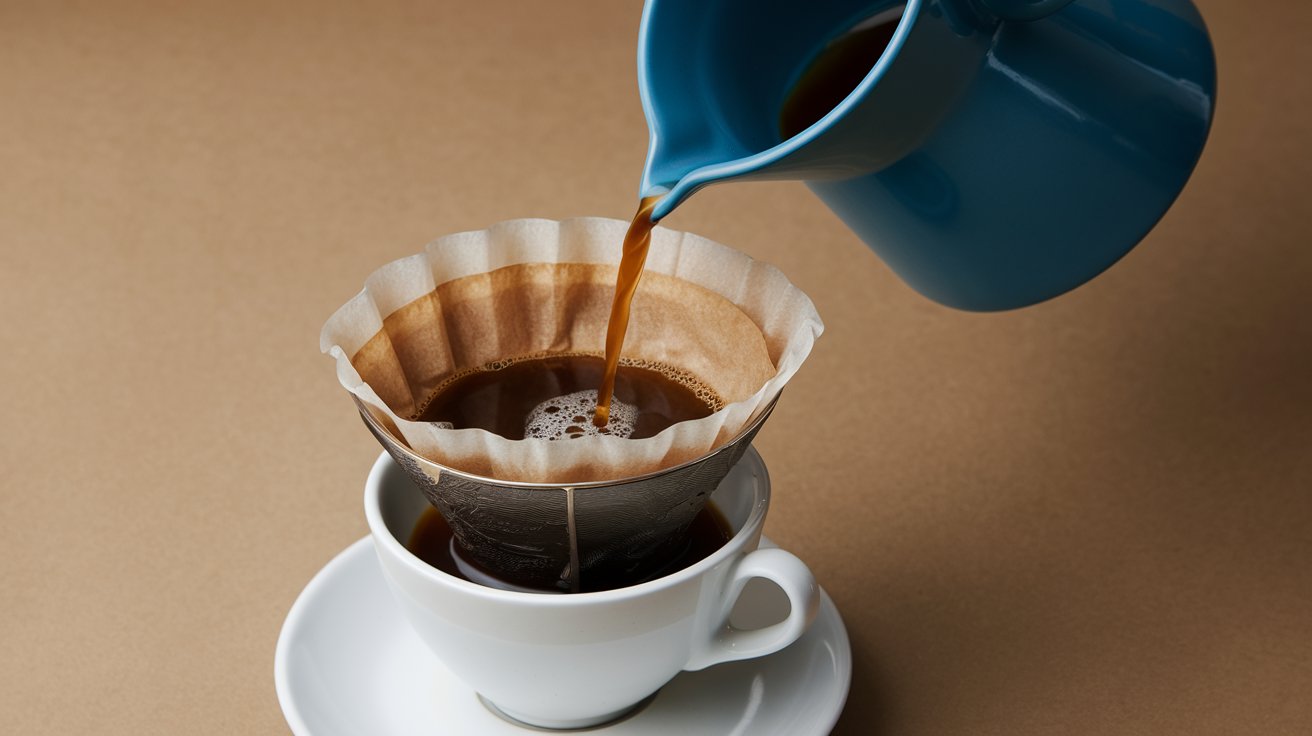
Proper pour over technique transforms good ratios into exceptional coffee by ensuring even extraction across all grounds. The process begins with the bloom phase—pouring approximately twice the coffee weight in water (44ml for 22g coffee) in a gentle spiral pattern, starting from the center and moving outward. This initial saturation releases carbon dioxide trapped in freshly roasted beans, creating the characteristic bloom expansion and preventing channeling during the main extraction phase.
After the 30-45 second bloom, main water addition should occur in 2-3 controlled pours rather than one continuous stream. For a 350ml total brew using 22 grams of coffee, add 150ml during the second pour (at 45 seconds), then complete with 156ml during the final pour (at 1:30). This staged approach maintains optimal coffee bed temperature and extraction consistency. Each pour should follow a circular pattern, avoiding the filter edges and focusing on the coffee bed center, expanding outward in concentric circles. Total brew time should land between 2:30 and 3:30 for optimal extraction—faster times suggest too-coarse grinding, while slower times indicate too-fine grinding or channeling issues.
Scaling Ratios for Cold Brew and Iced Pour Over
While traditional pour over focuses on hot brewing methods, iced pour over (Japanese-style flash brewing) requires ratio adjustments to account for ice dilution. The technique uses standard coffee amounts but replaces 40-50% of brew water with ice in the receiving vessel. For a 350ml final volume, use 22 grams of coffee with 180-210ml of hot water poured over 140-170ml of ice. This method produces bright, aromatic iced coffee that preserves the nuanced flavors often lost in traditional cold brew methods.
Traditional cold brew concentrate ratios differ substantially from pour over, typically ranging from 1:4 to 1:8 (coffee to water) for concentrate that’s later diluted. However, ready-to-drink cold brew uses ratios closer to 1:12 or 1:15, similar to pour over but with 12-24 hour steep times instead of minutes. In 2026, United States coffee enthusiasts increasingly experiment with hybrid methods like overnight cold pour over, where slow drip systems extract over 8-12 hours using 1:15 ratios, producing remarkably smooth coffee with enhanced sweetness. These alternative methods demonstrate how ratio fundamentals apply across various brewing approaches while requiring technique-specific adjustments.
Related video about pour over coffee ratio
This video complements the article information with a practical visual demonstration.
Essential Q&A about pour over coffee ratio
What is the best coffee to water ratio for pour over?
The best coffee to water ratio for pour over is 1:16 (1 gram of coffee to 16 grams or milliliters of water), which has become the industry standard in 2026. This translates to approximately 22 grams of coffee for a 350ml cup or 30 grams for 480ml. This ratio provides optimal extraction, balanced flavor, and appropriate strength for most coffee origins and roast levels. You can adjust to 1:15 for stronger coffee or 1:17 for lighter body based on personal preference.
How many tablespoons of coffee for pour over?
For pour over coffee, use approximately 2 tablespoons of medium-ground coffee per 6 ounces (180ml) of water. A standard 12-ounce cup requires 4-4.5 tablespoons (about 22 grams). However, tablespoon measurements vary based on grind size and density, making them less precise than gram-based measurements. For consistent results, invest in a digital scale—one level tablespoon of medium-ground coffee typically weighs 5-6 grams, allowing you to calibrate your specific measurements.
Should I adjust the pour over ratio for dark roast coffee?
Yes, dark roast coffee often benefits from a slightly stronger ratio of 1:15 compared to the standard 1:16 used for medium roasts. Dark roasts are more soluble due to extended roasting, and their naturally lower acidity and heavier body are better showcased with less dilution. For a 350ml cup, use 23-24 grams of dark roast instead of the standard 22 grams. Conversely, light roasts may benefit from 1:17 ratios to enhance their delicate, complex flavor profiles without overwhelming acidity.
How do I convert pour over ratio from grams to ounces?
To convert pour over ratios from grams to ounces, remember that 1 gram of coffee equals approximately 0.035 ounces, and water measurements are similar since 1ml of water equals 1 gram. For a 1:16 ratio with 350ml (12 ounces) of water, you need 22 grams of coffee, which equals approximately 0.78 ounces. Most United States coffee professionals in 2026 recommend using gram measurements for precision, but basic conversion is: divide your water ounces by 0.56 to get coffee grams needed (12oz ÷ 0.56 ≈ 22g).
Why does my pour over coffee taste weak even with correct ratios?
If your pour over tastes weak despite using correct ratios, the issue likely involves grind size being too coarse or brew time being too short, resulting in under-extraction. Coffee should brew for 2:30-3:30 minutes total—faster times indicate insufficient extraction. Try grinding slightly finer or pouring more slowly to extend contact time. Other factors include water temperature below 195°F, improper bloom technique, or stale coffee (ideally use beans within 2-4 weeks of roasting). Ensure your water quality is good, as poor water can also produce flat, weak-tasting coffee regardless of proper ratios.
Can I use the same pour over ratio for all brewing devices?
While the 1:16 ratio serves as an excellent baseline for all pour over devices, subtle adjustments optimize results for specific brewers. The Hario V60 works perfectly at 1:16, while the Chemex often benefits from 1:15 due to thicker filters and longer extraction. The Kalita Wave’s flat-bottom design accommodates 1:15 to 1:17 depending on preference. In 2026, most specialty coffee equipment includes manufacturer-recommended ratios, but starting with 1:16 and adjusting based on taste provides the most reliable approach for any device.
| Measurement Method | Ratio Details | Best Use Case |
|---|---|---|
| Grams (1:16) | 22g coffee to 350ml water (12oz cup) | Maximum precision and consistency |
| Tablespoons | 2 tbsp per 6oz water (4-4.5 tbsp for 12oz) | Quick measurement without scale |
| Single Cup | 15-22g coffee for 240-350ml water | Individual servings, freshest results |
| Two Cups | 44g coffee to 700ml water | Sharing or multiple servings |
| Light Roast | 1:17 ratio (20.5g for 350ml) | Enhanced clarity, reduced acidity |
| Dark Roast | 1:15 ratio (23g for 350ml) | Fuller body, balanced bitterness |